Kickback is the sudden, violent motion of a running chainsaw toward the operator. It happens in a fraction of a second, so you cannot react once it starts. The defense is to know where it comes from, keep the danger zone of the bar away from wood, and hold the saw so that you stay in control.
This guide is based on extension service guidance, Forest Service and manufacturer safety material, and saw makers’ manuals. It is a summary, not a substitute for your saw’s manual and for hands-on training.
The short answer
Kickback usually comes from the upper part of the bar nose. If the moving chain there touches wood or any object, the saw can rotate up and back toward your head and shoulders. A second family of events, called pinch and pull-in, happens when the wood grabs the chain. Both are avoided by the same habits: keep the nose clear, cut at full speed, stay out of the saw’s path and hold it firmly with both hands.
The kickback zone
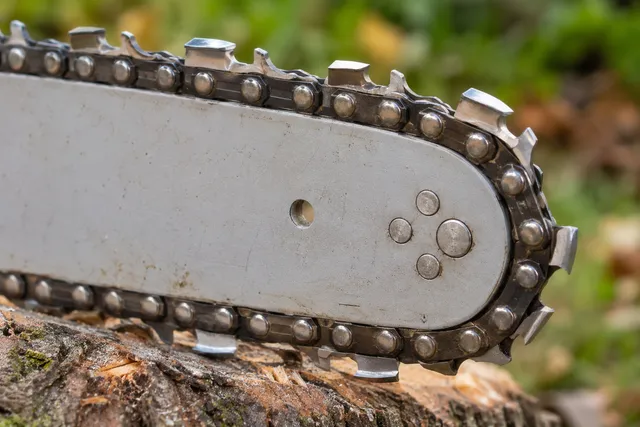
Husqvarna defines the kickback zone as the upper part of the guide bar’s nose, and advises never sawing with that section. When the chain catches wood there, the rotating chain grips the timber and drives the saw back and up. Oklahoma State Extension names a small hidden limb in the upper quadrant of the bar nose as the most common trigger.
Think of the bar tip as a clock face. The top quarter of the nose is the part that can throw the saw at you. The lower half and the bottom of the bar are where you do most of your cutting.
Situations where the nose most often touches something:
- Limbing, when the tip can hit logs, stumps, hidden branches or the end of a log.
- Starting a cut with the nose, especially when boring into the wood.
- Moving the saw from one cut to the next with the chain still turning.
- Cutting a small branch in a cluster of others.
- Checking oil flow by touching the tip to something.
Three kinds of reaction
| Type | What happens | Typical cause |
|---|---|---|
| Rotational kickback | The saw rotates up and back toward the operator | Upper nose touches wood or an object |
| Pushback (linear) | The saw is pushed straight back at you | Chain on the top of the bar stops, for example when wood closes on the bar |
| Pull-in | The saw is pulled forward, away from you | Chain on the bottom of the bar stops or grabs |
Extension and manufacturer sources describe pushback as the chain on top of the bar stopping suddenly, and pull-in as the chain on the bottom of the bar stopping suddenly. Pushback and pull-in are less violent than rotational kickback, but they can still pull you off balance or throw the saw back, and they can lead to kickback.
Pinch is the usual cause. A log under tension or compression closes on the bar. Read how to buck a log for how to avoid it.
What the safety features do and do not do
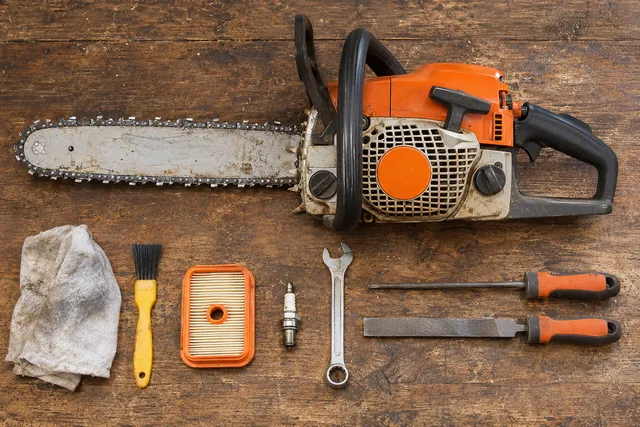
- Chain brake. It stops the chain, either when you push the front hand guard forward or when a kickback throws the saw and trips the brake by inertia. One extension account notes that a braked saw can still strike you, but the chain will not be turning. The brake can lose power with wear, oil, dirt or sawdust in the mechanism, and it must be checked before use. Do not run a saw that has no brake, or a brake that does not work.
- Low-kickback chain. Its guard links limit how deep each cutter can bite, which lowers the chance and force of kickback. It is recommended by saw makers.
- Reduced-kickback bar. A small-radius nose makes the kickback zone smaller.
- Bar-nose guard. Some saws allow a guard on the tip. Remove it for bore cuts or for wood thicker than the bar.
All of these reduce risk. None of them prevent kickback. Cornell’s small farms program makes the same point, and the saw makers’ manuals do not claim otherwise. Using a low-kickback chain does not mean you can stop watching the bar tip.
Grip and stance
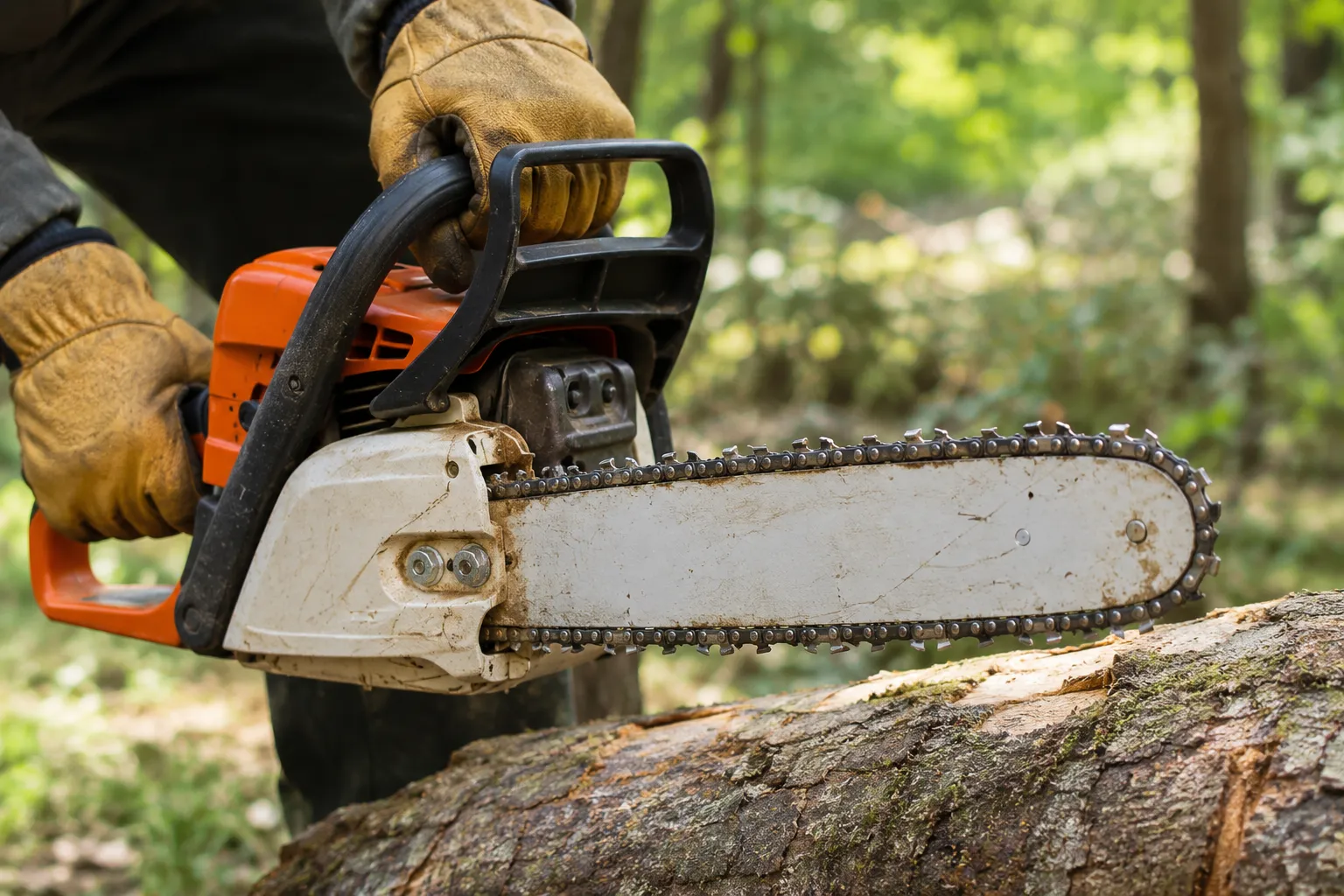
- Hold the saw with both hands, thumbs and fingers wrapped fully around the handles. Never use a saw one-handed.
- Keep your left thumb under the front handle. Husqvarna advises this to help hold the saw in a kickback.
- Stand with feet apart, left foot slightly forward, and keep the saw close to your body.
- Keep your body out of the saw’s plane. Stand to the side of the cutting path, not directly behind the bar, so that a kickback goes past you.
- Bend your knees, not your back, for low cuts, and never cut above shoulder height.
- Never cut left-handed. It puts the blade in line with a kickback.
- Make sure of your footing before the chain touches the wood.
Habits that prevent kickback
- Know where the nose is at all times. Keep the tip of the moving bar away from any object.
- Cut at full throttle. Starting a cut with the chain running slowly increases the chance of kickback.
- Keep the chain sharp and correctly tensioned. Extension guidance notes that a misfiled, loose or dull chain makes kickback more likely and tempts you to push. See how tight a chain should be and best chainsaw sharpeners.
- Use the bumper spikes. Seat them against the wood before pulling the saw into the cut, so the saw pivots on them and not on the chain.
- Keep the bar centered in the cut. Do not twist it in the kerf.
- Cut one log at a time. Clear the area, and look for hidden limbs, wire and nails.
- Set the brake before you move. One extension source advises engaging the brake whenever you move more than two steps with the saw running, and shutting the saw off is better still.
Causes and preventions
| Cause | How to prevent it |
|---|---|
| Nose touches a log, branch or the ground while the chain runs | Watch the tip. Release the trigger between cuts |
| Boring in with the nose (plunge cuts) | Skip it until you have had training, and follow the method in your saw’s manual |
| Wood closes on the bar | Read the tension and compression, cut in the right order, use a wedge |
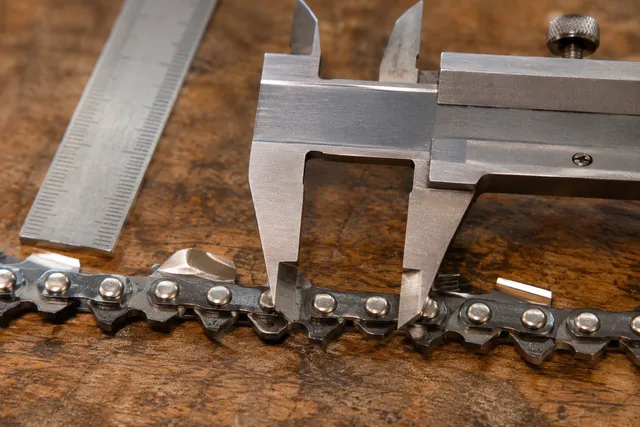
| Dull, loose or mismatched chain | Sharpen, tension cold, match pitch and gauge |
| Cutting at low RPM | Start the cut at full throttle |
| One-handed or off-balance cutting | Two hands, firm footing, stay below shoulder height |
| Cluttered work area, hidden limbs | Clear the area first and look before you cut |
| Worn chain brake | Test it before use and keep it clean |
Clothing and gear
Kickback often hits the head, neck, shoulder or arm, and a slipped saw can reach the leg. A helmet with a face screen, chaps, gloves and boots limit the damage. See what to wear when using a chainsaw for the full list. Gear does not prevent kickback, so treat it as the second line of defense.
Mistakes to avoid
- Trusting the chain brake to save you.
- Limbing with the nose against the stem.
- Reaching up to cut a limb above your shoulders.
- Letting a dull chain make you lean on the saw.
- Fitting a bar or chain the saw’s manual does not list for it.
- Skipping training. A session with a certified trainer or a local extension workshop teaches technique that no article can.
Bottom line
Kickback comes from the upper nose touching something, from wood closing on the bar, or from a chain that grabs. Keep the nose clear, cut at full speed, hold the saw with two hands, stand out of its path and keep the brake in working order. Safety features reduce the risk without removing it, so technique matters more than equipment. Follow your saw’s manual, and see our how to start a chainsaw guide for the pre-start checks.
Common questions
What causes chainsaw kickback?
Rotational kickback happens when the upper part of the bar nose touches wood or any object while the chain is moving, which throws the saw up and back. Pinch kickback happens when wood closes on the bar or the chain stops suddenly, and the saw is pushed or pulled by the reaction.
Will a chain brake stop kickback?
No. A chain brake stops the chain after kickback begins, and it can help limit the injury, but it does not prevent the saw from moving. The brake also needs to be clean and in working order to work well.
Do low-kickback chains and bars remove the risk?
No. They reduce the chance and the force of kickback, and manufacturers recommend them. Manuals and extension guides stress that they lower the risk and do not eliminate it.
Which part of the bar is dangerous?
The upper quadrant of the bar nose, often called the kickback zone. Keep it away from logs, branches, the ground and anything else while the chain is moving.
Can I use a chainsaw with one hand?
No. Hold the saw with both hands and wrap your thumbs around the handles. Manufacturers advise against one-handed use and against cutting above shoulder height.