Most starting problems come from skipping a step or pulling on with the choke in the wrong position. The exact controls vary by brand, so your owner’s manual has the final word, but the sequence below applies to nearly every gas chainsaw sold today.
Before you start
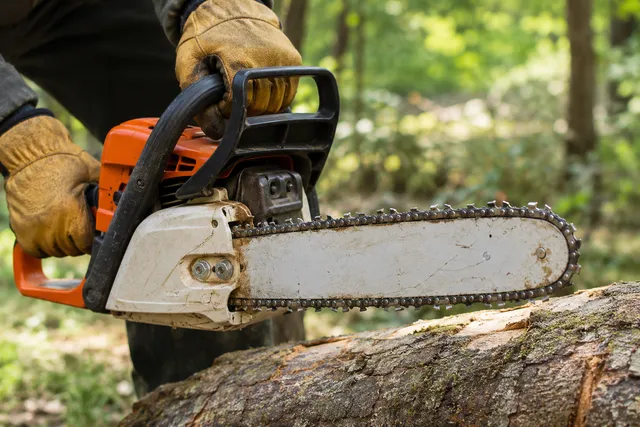
- Protective gear. Chainsaw chaps or trousers, sturdy boots, gloves, eye protection and hearing protection. Add a helmet for felling or overhead work.
- Fuel and bar oil. Use fresh fuel mixed at the ratio in your manual, 50:1 on most modern saws, and fill the bar oil tank. Fuel left in a can for months is a common reason a saw will not start.
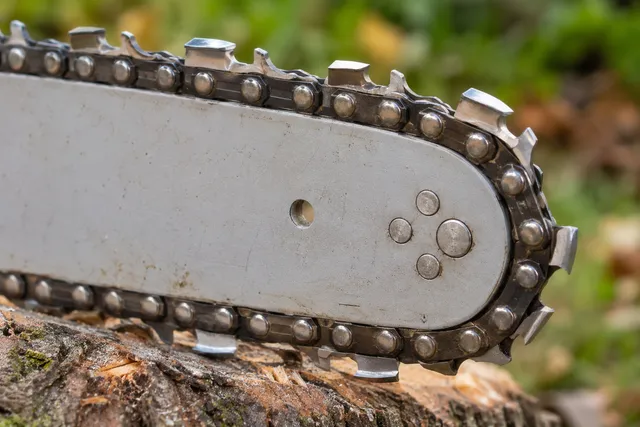
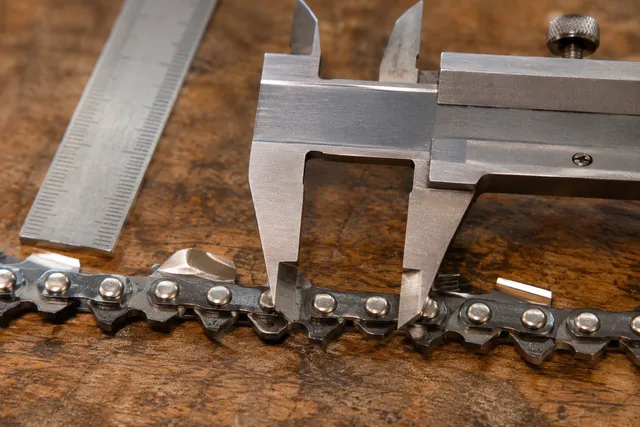
- Chain. Check that it is sharp, the right way round and correctly tensioned. See how tight a chainsaw chain should be.
- Space. Move at least ten feet from where you refueled, and make sure the bar and chain touch nothing.
Two safe starting positions
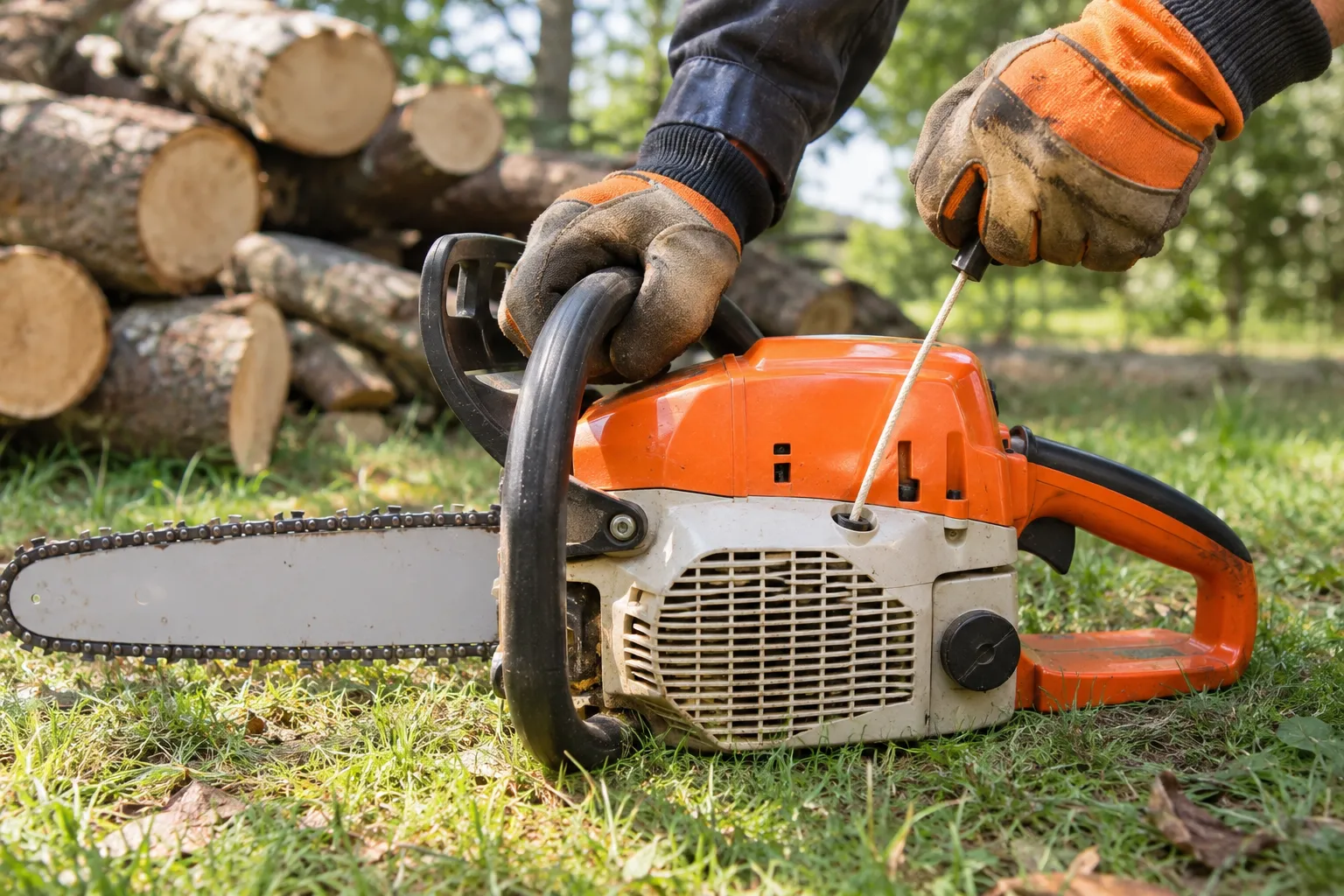
On the ground. Set the saw on firm, flat ground. Put the toe of your right boot through the rear handle and hold the front handle down with your left hand, arm straight. Pull the cord with your right hand.
Between the legs. Grip the rear handle between your thighs, hold the front handle with your left hand and pull with your right. This is easier on the back once you are used to it.
Never drop start a saw.
Starting a cold engine
- Engage the chain brake by pushing the front hand guard forward.
- Switch the ignition on.
- Press the decompression valve if your saw has one. It makes the cord easier to pull.
- Press the primer bulb several times if fitted, until you see fuel in it.
- Set full choke. On many saws one master lever handles ignition, choke and fast idle.
- Pull the starter cord. Draw it out slowly until you feel resistance, then pull briskly. Guide the cord back in; do not let it snap.
- Listen for the engine to fire once. It usually coughs or pops within a few pulls and then dies. That is your signal.
- Move the choke to half or to the fast idle position.
- Pull again until the engine runs.
- Squeeze the throttle briefly to drop the engine from fast idle to normal idle.
- Let it warm up for a few seconds, then release the chain brake when you are ready to cut.
The most common mistake is to keep pulling on full choke after the engine has fired. That floods it.
Starting a warm engine
A saw that has been running in the last few minutes needs no choke.
- Engage the chain brake.
- Ignition on, choke off.
- Pull the cord. It should start within a pull or two.
If a warm engine refuses, try the half choke or fast idle position for one or two pulls.
Clearing a flooded engine
A flooded engine smells of fuel and will not fire no matter how often you pull.
- Turn the choke off.
- Hold the throttle wide open.
- Pull the cord several times until the engine sputters and starts. It may smoke for a moment.
If that fails, remove the spark plug, dry it, pull the cord a few times with the plug out to clear the cylinder, refit the plug and start again with no choke.
Battery and corded saws
Electric saws have no starting procedure, which is a large part of their appeal.
- Battery: fit a charged battery, release the chain brake, press the lock-out button and squeeze the trigger.
- Corded: use an outdoor extension cord of the gauge and length your manual specifies, release the brake, press the lock-out and squeeze the trigger.
The same protective gear applies. An electric saw is quiet, and the chain is just as sharp.
If it still will not start
| Symptom | Likely cause | Fix |
|---|---|---|
| No sign of firing | Ignition switch off, or stale fuel | Check the switch, refill with fresh mix |
| Fires once, then nothing | Left on full choke, now flooded | Clear the flooding as above |
| Starts, then dies at idle | Dirty air filter or idle set too low | Clean the filter, check the manual for idle adjustment |
| Cord very hard to pull | Decompression valve not pressed, or chain brake fault | Press the valve, check that the chain moves freely by hand with the saw off |
| Wet, black spark plug | Flooding or too much oil in the mix | Dry or replace the plug, check the fuel mix |
For the right oil and ratio, see our guide to the best 2-stroke oil for chainsaws.
Bottom line
Brake on, full choke until the engine fires once, then half choke until it runs, then a blip of throttle. If you smell fuel and nothing happens, stop pulling and clear the flooding with the choke off and the throttle wide open.
Common questions
Why will my chainsaw not start?
The usual causes are stale fuel, a flooded engine, the choke left in the wrong position, a fouled spark plug or a clogged air filter. Start with fresh fuel mix and the correct choke setting before looking further.
How do I start a flooded chainsaw?
Turn the choke off, hold the throttle wide open and pull the starter cord several times until the engine clears and fires. If it still will not start, remove the spark plug, dry it, pull the cord a few times with the plug out, then refit it.
How many pulls should it take to start a chainsaw?
A saw in good condition usually fires within a few pulls on full choke and starts within a few more on half choke. If you are far past that, stop and check for flooding or stale fuel instead of pulling harder.
Is it safe to drop start a chainsaw?
No. Drop starting, pushing the saw away with one hand while pulling the cord with the other, leaves the saw uncontrolled. Start it on the ground or locked between your legs.
Do I need to engage the chain brake before starting?
Yes. Starting on fast idle makes the chain spin as soon as the engine catches. With the brake engaged the chain stays still until you are ready.