A chainsaw chain only cuts in one direction. Put it on backwards and the saw will rub, smoke and scorch the wood without making a real cut. It is one of the most common mistakes after fitting a new chain, and it takes about five minutes to fix.
The short answer
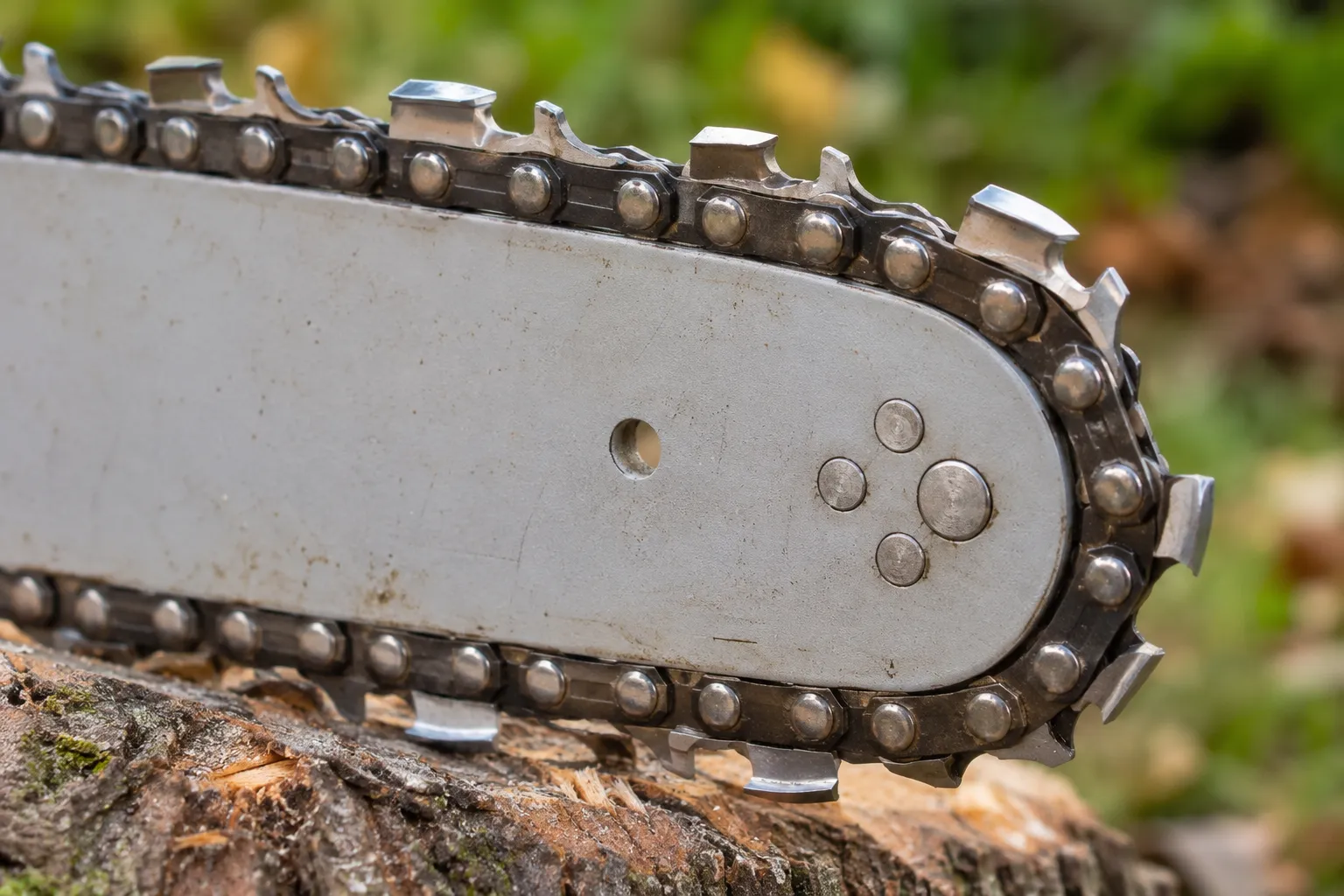
Look at the chain on the top of the bar. The sharp cutting edges should point forward, toward the tip of the bar and away from the engine.
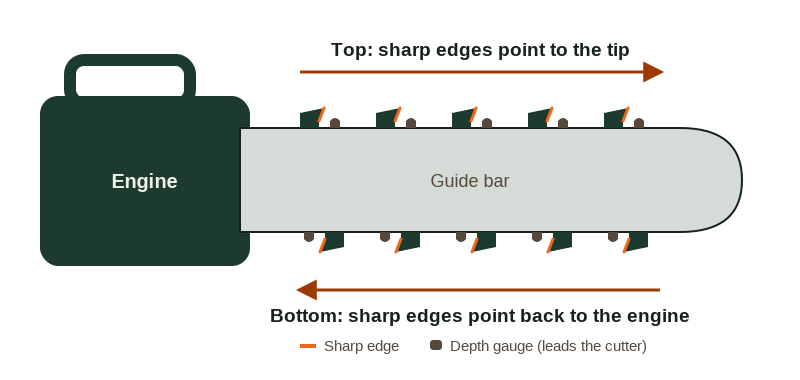
That is because the chain travels in a loop: it runs out along the top of the bar, turns around the nose, and comes back along the bottom. On the bottom of the bar the same cutters therefore point back toward the engine. Both are correct at the same time.
How to read a cutter
Each cutting link has two parts that tell you which way it is meant to travel:
- The cutter is the taller part with a sharpened, angled top plate. The sharp edge is at the front.
- The depth gauge, often called the raker, is the small rounded hump on the same link. It sits just ahead of the cutter and controls how deep the cutter bites.
In the direction of travel, the depth gauge always goes first and the sharp edge follows right behind it. So on the top of the bar, each link should read, from the engine toward the tip: flat back of the cutter, sharp edge, then depth gauge.
If you see the depth gauges trailing behind the cutters on the top run, the chain is on backwards.
| Where you look | Sharp edge points | Chain is moving |
|---|---|---|
| Top of the bar | Toward the bar tip | Away from the engine |
| Around the nose | Downward | Around the tip |
| Bottom of the bar | Toward the engine | Back to the engine |
Signs your chain is on backwards
- The saw makes smoke and fine dust but no chips.
- You have to push hard and it still barely marks the wood.
- The cut is blackened or polished instead of clean.
- The chain looked sharp when you fitted it, and the problem started right after.
A dull chain can cause some of the same symptoms, but a dull chain still pulls itself into the wood a little. A backwards chain does not bite at all.
How to put the chain on the right way
Wear gloves: a sharp chain cuts skin easily even when it is not moving.
- Make the saw safe. Switch off the engine and let it cool. On a gas saw, pull the spark plug boot. On a battery saw, remove the battery. Unplug a corded saw.
- Release the chain brake. On most saws the side cover will not come off, or will not go back on, with the brake engaged.
- Loosen the bar nuts with the scrench, then back off the tensioning screw a few turns so the chain goes slack.
- Remove the side cover and lift the bar and chain off the studs.
- Flip the chain. Take it off the bar, turn the loop over so the cutters on the top run face the bar tip, and lay it back in the bar groove.
- Seat the chain. Hook the drive links over the drive sprocket behind the clutch, fit the bar over the studs, and make sure the tensioner pin sits in its hole in the bar.
- Refit the cover and run the bar nuts on finger-tight only.
- Tension the chain. Hold the bar tip up and turn the tensioner until the chain sits snug against the underside of the bar. You should still be able to pull it around the bar by hand, and when you lift it at the middle of the bar the drive links should not come fully out of the groove.
- Tighten the bar nuts firmly while still holding the bar tip up.
- Check the direction once more before you reconnect the spark plug or battery.
A new chain stretches during its first few cuts, so stop and re-check the tension after a couple of minutes of work.
Why it matters beyond not cutting
Running a backwards chain does more than waste time. The blunt backs of the cutters generate heat instead of chips, which can blue the bar rails, cook the bar oil and stretch the chain. If you notice smoke with no chips, stop straight away and check the direction.
While the chain is off
It is a good moment for two quick jobs:
- Clean the bar groove and the oil hole with a thin scraper or a piece of wire, so bar oil reaches the chain.
- Check the edge. If the cutters are shiny on their top edge or the chain was making dust before you took it off, sharpen it now. Our guide to the best chainsaw sharpeners covers the options from a file guide to a bench grinder.
Bottom line
On the top of the bar, the sharp edges point toward the tip. Depth gauge first, sharp edge behind it, in the direction the chain travels. If a freshly fitted chain smokes and will not cut, flip it before you blame the chain.
Common questions
Which way should the teeth face on a chainsaw?
On the top of the bar, the sharp edge of each cutter faces forward, toward the tip of the bar and away from the engine. On the bottom of the bar, the cutters face back toward the engine.
What happens if a chainsaw chain is on backwards?
The saw will not cut. The blunt back of each cutter rubs on the wood, so you get smoke, burn marks and fine dust instead of chips. Running it that way for long wears the bar and chain and overheats them.
Does a chainsaw chain direction change on an electric or battery saw?
No. Gas, corded and battery saws all drive the chain the same way, forward along the top of the bar and back along the bottom, so the cutters face the same direction.
Do chainsaw chains have a direction arrow?
Some do. Certain chains have small arrows stamped on the drive links or tie straps showing the direction of travel. Many chains have no arrow, so it is better to learn to read the cutters themselves.
Can a new chain be installed backwards from the factory?
A saw sold assembled should have the chain on correctly, but chains are easy to flip when you fit one yourself or put it back after cleaning. If a freshly fitted chain will not cut, check its direction before anything else.