Three numbers decide whether a chain fits your saw: pitch, gauge and the number of drive links. Pitch is the one that causes the most confusion, because it sounds like a single measurement on the chain but has to match two other parts of the saw as well.
What pitch means
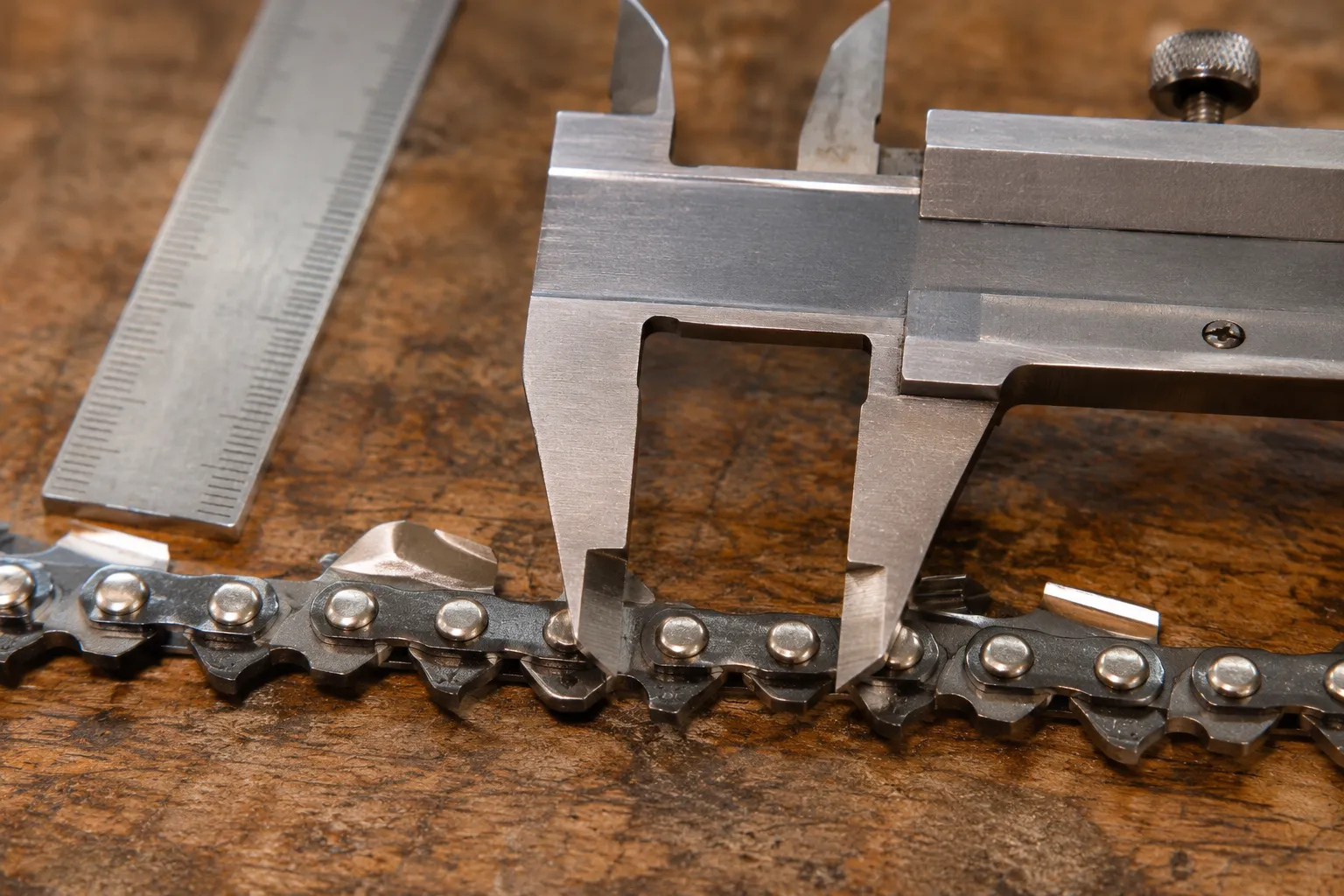
Pitch is the size of the chain: how far apart its links are spaced. Formally, it is the distance between any three consecutive rivets, divided by two.
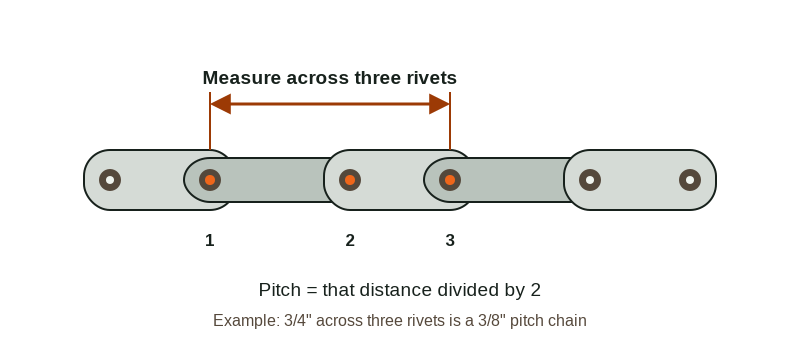
It is measured that way because the links alternate between cutters and tie straps, so the spacing between two neighboring rivets is not constant. Measuring across three and halving the result gives the true average.
A larger pitch means bigger, heavier links. Bigger links carry more power and take a wider bite, but they need a stronger engine to pull them.
Common chain pitches
| Pitch | Measured across three rivets | Typically found on |
|---|---|---|
| 1/4” | 1/2” | Small pruning, carving and pole saws |
| 3/8” low profile | 3/4” | Homeowner gas saws and most battery saws |
| .325” | About 0.65” | Mid-size farm and ranch saws |
| 3/8” | 3/4” | Larger and professional saws |
| .404” | About 0.81” | Big saws, milling and harvester bars |
These are typical pairings, not rules. Saw makers choose the pitch to suit the power of each model, and some models are offered with more than one.
3/8” and 3/8” low profile are not the same chain
Both measure 3/4” across three rivets, which is why they share a number. Low profile chain, which Stihl calls Picco, has shorter cutters and a lighter build for saws with less power. The two use different sprockets and bars, so treat them as separate sizes. If your saw came with low profile chain, buy low profile chain.
How to measure pitch
You need a ruler or, better, a caliper.
- Lay a section of chain flat and straight.
- Pick any rivet and measure from its center to the center of the rivet two places along, so that you span three rivets.
- Divide by two.
For example, 3/4” across three rivets gives a 3/8” pitch, and about 0.65” gives .325”.
The gaps between sizes are small, so a tape measure can mislead you on a worn or stretched chain. Use the measurement to confirm what the bar or the chain markings say, not as your only source.
Easier ways to find your pitch
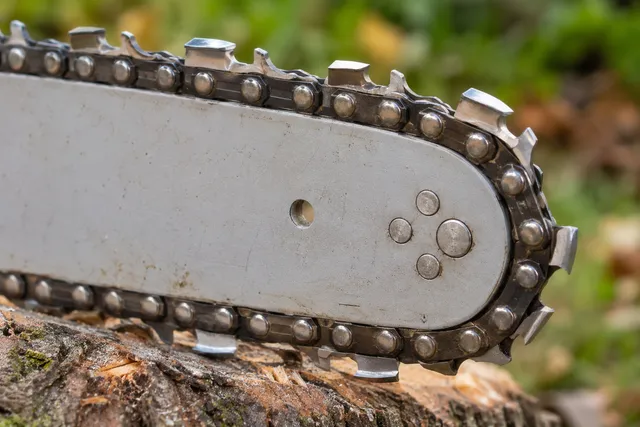
- Read the guide bar. Most bars are stamped near the mounting end with pitch, gauge and drive link count, for example
3/8 LP .050 56. - Read the chain. Many chains have a number or letter code stamped on the drive links or depth gauges. Each maker uses its own codes, so look the code up in that maker’s chart.
- Check the manual or the old chain’s box. The saw’s manual lists the chain sizes it was built for.
Pitch, gauge and drive links
A replacement chain has to match on all three.
Pitch has to match the drive sprocket on the engine and, if the bar has a sprocket in its nose, the nose sprocket too. A chain of the wrong pitch will not seat on the sprocket teeth.
Gauge is the thickness of the drive links, the tabs that ride in the bar groove. Common gauges are .043”, .050”, .058” and .063”. Too thick and the chain will not fit the groove; too thin and it will wobble and cut crooked.
Drive link count sets the length of the loop. Count every tab on the inside of the chain. Two bars of the same nominal length can need different counts, so go by the count, not by the bar length alone.
| Spec | What it is | What it must match |
|---|---|---|
| Pitch | Spacing of the links | Drive sprocket and bar nose sprocket |
| Gauge | Thickness of the drive links | Width of the bar groove |
| Drive links | Number of tabs on the loop | Bar length and saw model |
Does pitch affect how the saw cuts?
Yes, within what your saw can use.
- Smaller pitch chains are lighter and take less power to drive. They run smoothly and suit small engines and battery saws.
- Larger pitch chains remove more wood per pass and hold up better under heavy use, but they need the power to match.
Many .325” and low profile chains are also sold in narrow kerf versions, which cut a thinner slot. That takes less power, which is why they are popular on battery saws. Narrow kerf chain needs a matching narrow bar.
Changing pitch is possible on many saws, but it means replacing the drive sprocket and usually the bar. For most owners there is no reason to: stay with the pitch the saw was designed around.
Pitch and sharpening
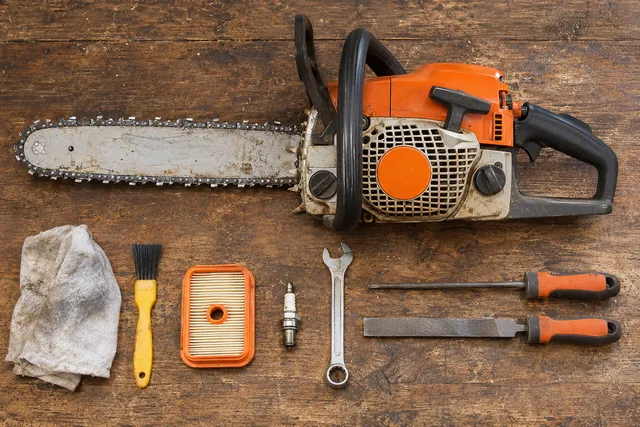
Pitch also tells you which file to use. Low profile and 1/4” chains usually take a 5/32” file, .325” a 3/16” file, and standard 3/8” and .404” a 7/32” file, with some exceptions by brand. Our guide to the best chainsaw sharpeners has the full table and the tools that go with it.
Bottom line
Pitch is the spacing of the chain’s links, found by measuring across three rivets and dividing by two. Read it off the bar if you can, confirm it with a measurement if you cannot, and always buy a chain that matches your saw on pitch, gauge and drive link count together.
Common questions
What is the pitch of a chainsaw chain?
Pitch is the average distance between the chain's rivets. It is measured as the distance between any three consecutive rivets, divided by two, and is given in inches.
How do I know what pitch my chainsaw chain is?
Check the guide bar first, since pitch, gauge and drive link count are usually stamped near the mounting end. If the stamp is worn off, measure across three consecutive rivets and divide by two, or look for the size code stamped on the chain itself.
Can I put a different pitch chain on my chainsaw?
Only if you also change the drive sprocket and, on bars with a sprocket nose, the bar. Pitch has to match on the chain, the drive sprocket and the bar nose, so in practice you buy the pitch the saw was built for.
Is 3/8 low profile the same as 3/8 chain?
No. Both measure 3/8 inch between rivets, but low profile chain is a smaller, lighter chain made for small saws. Treat them as different sizes and do not mix them on the same bar and sprocket.
What is the most common chainsaw chain pitch?
On homeowner saws it is 3/8 inch low profile. Mid-size saws commonly use .325 inch, and larger professional saws use standard 3/8 inch.