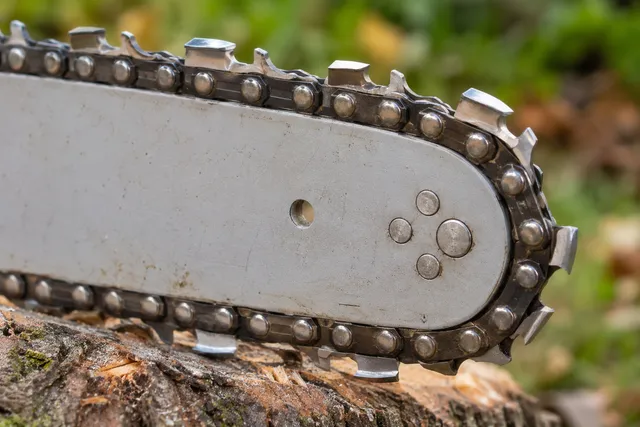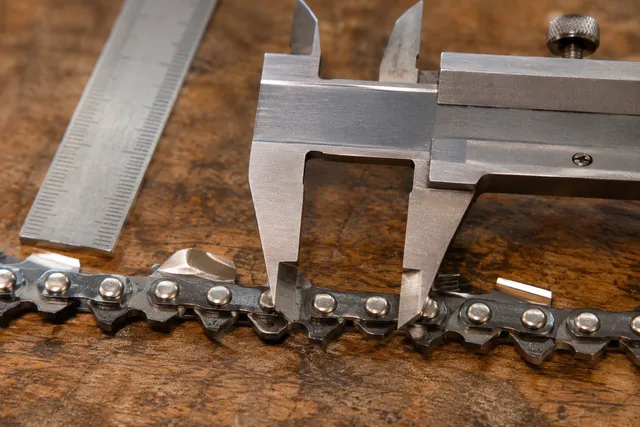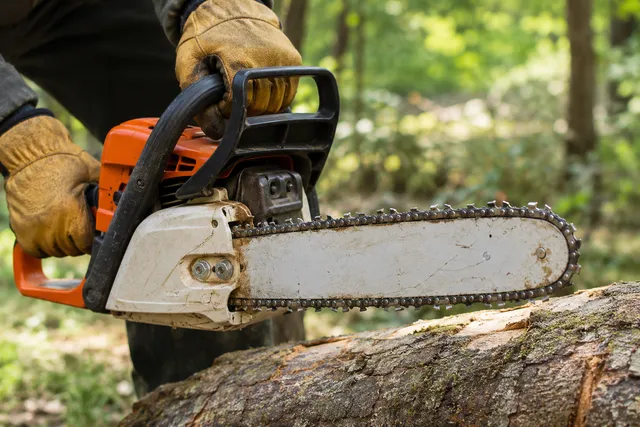
A correctly tensioned chain sits snug against the bar and still moves freely by hand. Too loose and it can jump off the bar. Too tight and it cooks the bar, the chain and the drive sprocket. Checking takes about ten seconds, and it is worth doing every time you refuel.
The short answer
With the saw off and the chain brake released, a properly tensioned chain passes two checks:
- No sag. The chain touches the underside of the bar along its whole length.
- It still moves. Wearing gloves, you can pull the chain around the bar by hand without forcing it.
If both are true, the tension is right.
Two quick tests
The pull test
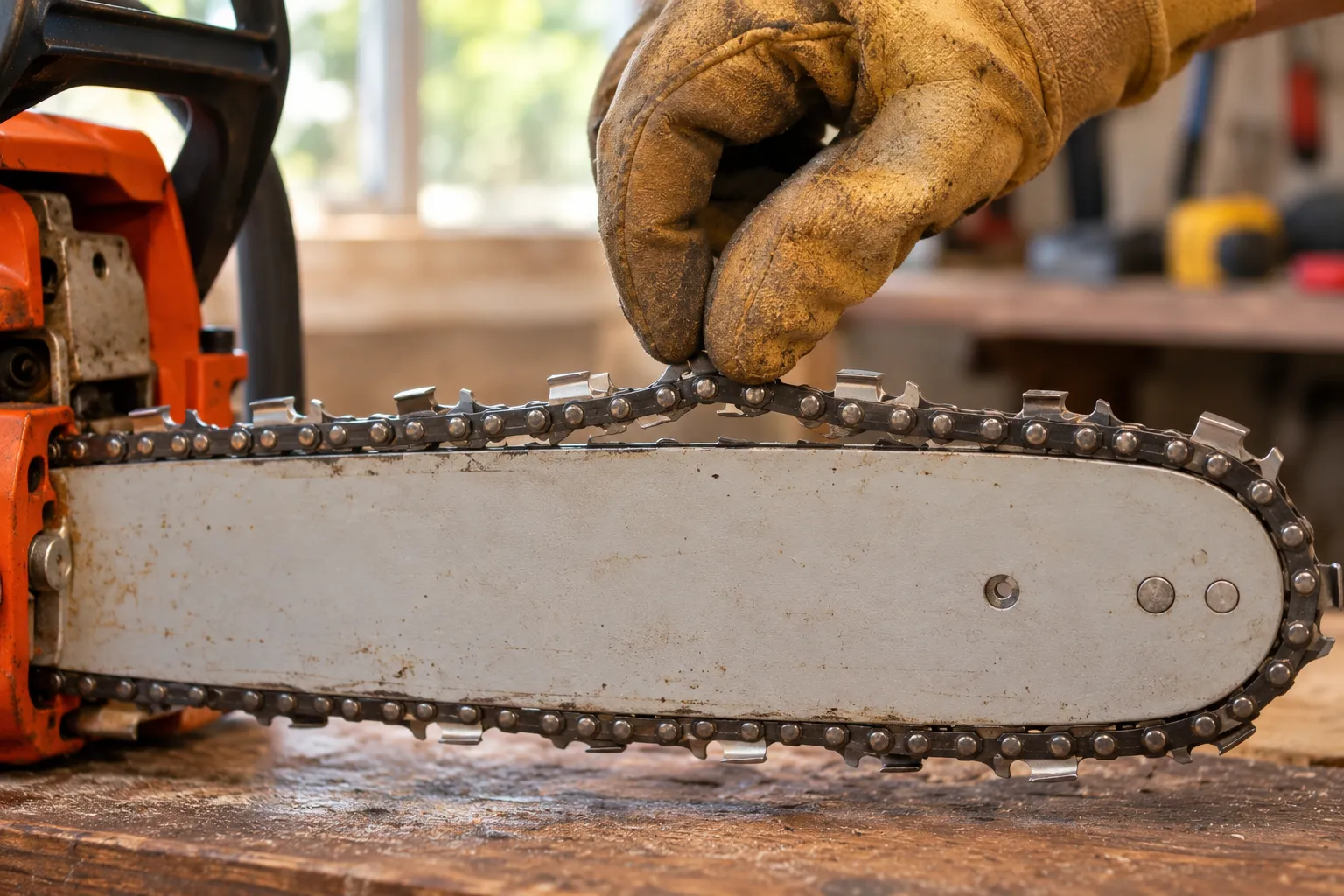
At the middle of the bar, pinch the chain on the top run and lift it. On a correctly tensioned chain the drive links, the tabs that ride in the bar groove, rise but do not come completely clear of the groove.
- Drive links lift fully out of the groove: too loose.
- Chain will not lift at all: too tight.
The snap test
Pull the chain down from the underside of the bar a little and let go. It should snap straight back against the bar. If it hangs or returns lazily, tighten it.
| What you see | What it means | What to do |
|---|---|---|
| Chain hangs below the bar | Too loose | Tighten |
| Drive links come fully out of the groove | Too loose | Tighten |
| Snaps back, moves freely by hand | Correct | Nothing |
| Cannot be pulled around by hand | Too tight | Loosen |
How to adjust the tension
Switch the saw off first. On a gas saw let it cool and pull the spark plug boot; on a battery saw remove the battery; unplug a corded saw. Wear gloves.
- Release the chain brake. The chain cannot move freely with the brake on.
- Loosen the bar nuts about one turn, just enough that the bar can move. Do not remove them.
- Lift the tip of the bar and hold it up. This takes up the play in the bar mount.
- Turn the tensioning screw. Clockwise tightens on most saws. The screw is usually on the side cover or at the front of the saw next to the bar.
- Check with the pull test and by pulling the chain around the bar by hand.
- Tighten the bar nuts firmly while still holding the bar tip up.
- Check once more. Tightening the nuts can change the tension slightly.
Saws with tool-less tensioning work the same way: loosen the large knob on the side cover, turn the tensioning ring or wheel, then tighten the knob again.
Why hot and cold matter
Metal expands as it heats, so a chain gets longer while you cut and shorter as it cools.
- Set the tension cold. That is the baseline the saw is designed around.
- A chain that loosens during work can be tightened, but loosen it again when you stop. A chain tensioned hot can shrink enough as it cools to damage the bar or the drive.
- New chains stretch. Expect to re-tension a new chain after the first few cuts, and again a few times during its first hour.
What happens when tension is wrong
Too loose
- The chain can derail, which is dangerous and often damages the drive links.
- It slaps against the bar, wearing the rails unevenly.
- Cuts wander and feel rough.
Too tight
- The bar and chain run hot and bar oil cannot do its job.
- The bar nose and the drive sprocket wear quickly.
- The engine or motor has to work harder, and battery run time drops.
If the chain will not stay tight
- Bar nuts not fully tightened. The most common cause.
- Worn drive sprocket. Look for deep grooves where the drive links ride.
- Worn bar rails. A spread or uneven groove lets the chain rock.
- Tensioner pin not seated in its hole in the bar after the cover was refitted.
- A chain at the end of its life. Once the tensioner runs out of adjustment, replace the chain.
While you are there, check that the chain is the right way round (chain direction guide) and that it is sharp. A dull chain makes people push harder and blame the tension. Our guide to the best chainsaw sharpeners covers the options.
Bottom line
Snug against the underside of the bar, no sag, and still free to pull around by hand. Set it cold, re-check a new chain often, and look at it every time you refuel.
Common questions
How tight should a chainsaw chain be?
Snug against the underside of the bar with no sag, but still loose enough to pull around the bar by hand. When you lift the chain at the middle of the bar, the drive links should stay partly in the groove.
How do I know if my chainsaw chain is too loose?
It hangs below the underside of the bar, the drive links come completely out of the groove when you pull the chain down, or it rattles and slaps while running. A loose chain can jump off the bar.
Can a chainsaw chain be too tight?
Yes. If you cannot pull it around the bar by hand with the brake off, it is too tight. That overheats the bar and chain, wears the bar nose and drive sprocket, and puts extra load on the engine or motor.
Why does my chainsaw chain keep coming loose?
New chains stretch during their first few cuts, and every chain lengthens as it heats up. If it loosens constantly, check for a worn drive sprocket, worn bar rails, bar nuts that are not tight, or a chain at the end of its life.
Should I tension the chain hot or cold?
Set the tension with the chain cold. If you have to tighten a hot chain during work, loosen it again when you finish, because it shrinks as it cools and can end up far too tight.