A clean chainsaw runs cooler, oils better and breathes better. The dirt that matters is the packed sawdust and resin in the sprocket area, the bar groove, the air filter and the cooling fins. Fifteen minutes after each work day is enough for most of it.
This guide follows the cleaning and maintenance pages of Stihl, Husqvarna and Echo. Filters and covers differ from saw to saw, so use your manual for the details.
Before you start
Make sure the saw cannot start. Gas saw: engine off, cool, spark plug boot pulled. Battery saw: remove the battery. Corded: unplug it. Engage the chain brake and wear work gloves, since a stationary chain still cuts.
You will want a stiff brush, a clean rag, a groove cleaner or thin scraper, a flat file or bar dressing tool, resin remover and a container for the chain. The accessories guide covers the usual small items.
Step 1: Side cover and sprocket area
- Loosen the bar nuts or the knob and take off the side cover.
- Release the chain tension, then lift off the bar and chain. Stihl’s page says to remove both before cleaning.
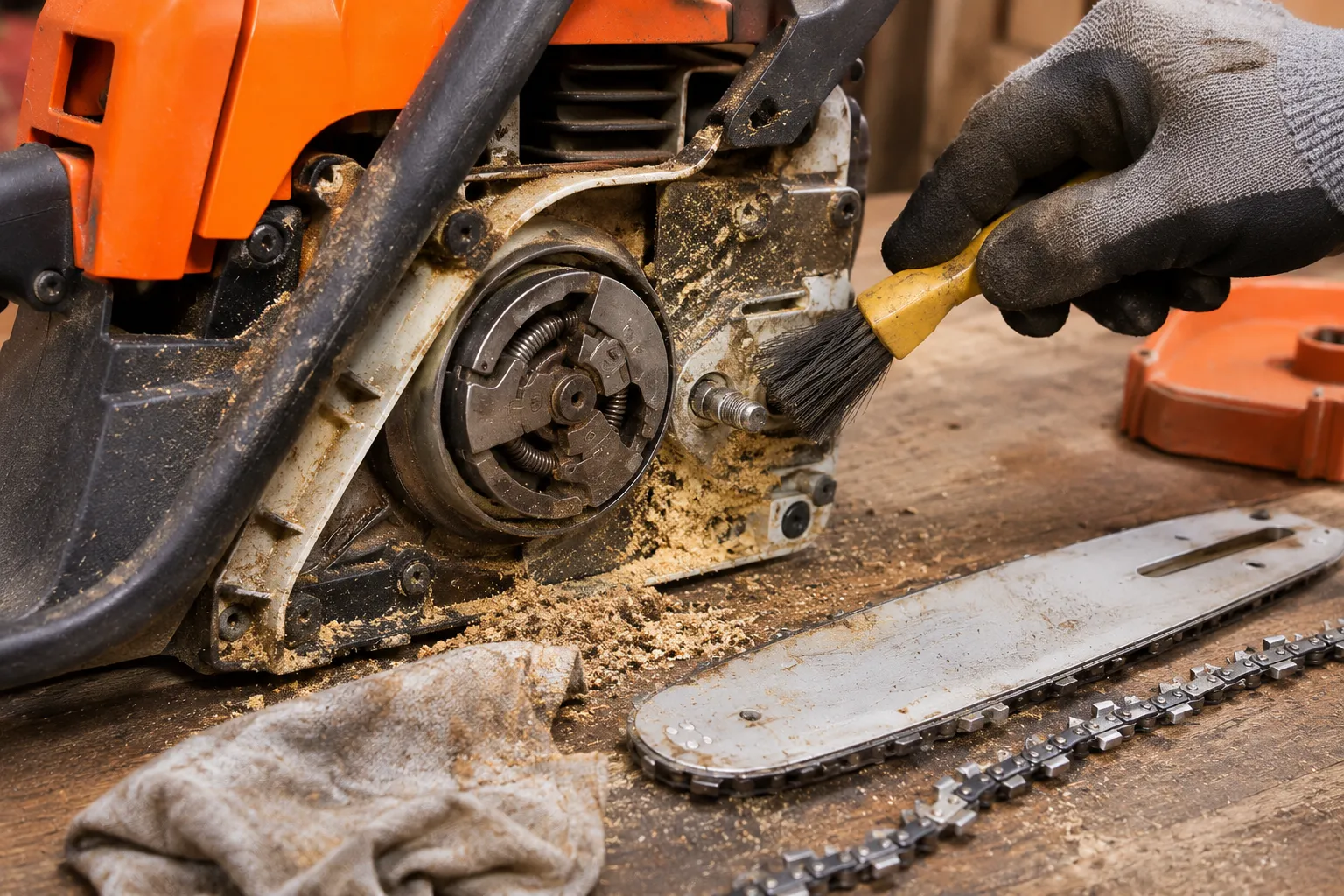
- Brush out the chips from the sprocket area, the clutch drum and the inside of the cover.
- Use a resin remover on stubborn buildup, then wipe dry.
- Look at the drive sprocket. Deep grooves where the drive links ride mean it is worn.
Packed debris here makes the chain bind and can block the oil path to the bar.
Step 2: Bar groove and oil holes
Stihl says to clear the oil outlet channel, the oil inlet hole and the groove. Clogged oil holes are one of the most common reasons a saw stops oiling.
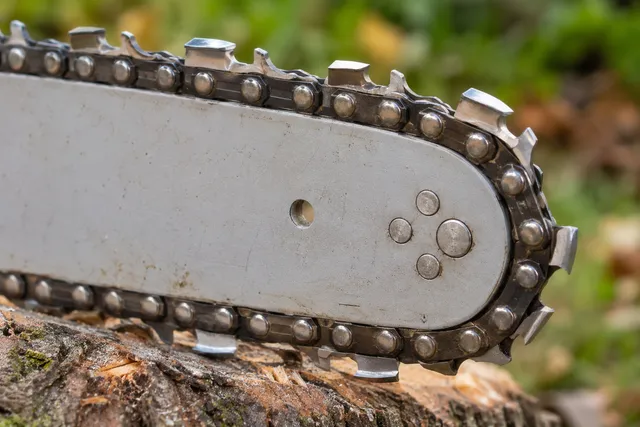
- Run a groove cleaner or a thin scraper all the way around the bar groove.
- Clear each oil hole on the bar with a thin wire or pick.
- Clear the oil outlet on the saw body where the bar sits.
- Spray resin solvent on any gummy spots, let it work, and wipe.
If the saw still does not oil after this, that is a separate problem. Husqvarna says oil that leaks out after the saw stops is normal run-off, not a fault, but a bar that stays dry while cutting needs a check against the oil test in your manual.
Step 3: Bar rails and burrs
Run your gloved fingers along the rails, then check for burrs or a raised edge. Stihl’s maintenance chart lists deburring the bar and turning it over.
- File off burrs with a flat file or a bar dressing tool, keeping the rails square.
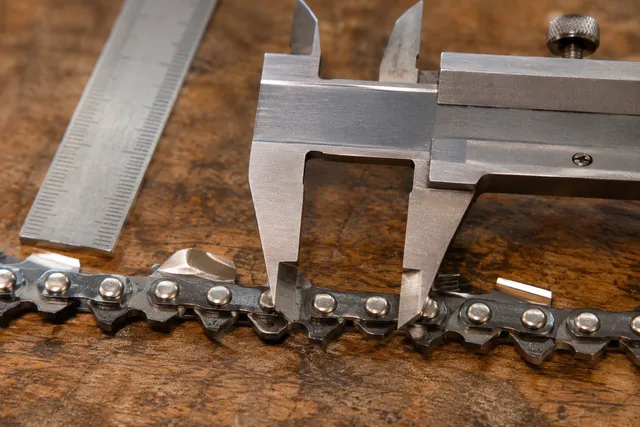
- Check the groove width and the nose. A rail that is spread, pinched or badly worn means a new bar.
- Flip the bar when you put it back on, so wear is spread over both sides.
Step 4: Chain soak and cleaning
- Drop the chain in a container with a resin solvent or a cleaner suited to chain, per the product label.
- Let it soak, agitate it, and brush the cutters, tie straps and drive links.
- Dry it and spray or dip it in bar oil.
- Inspect for cracked or damaged cutters, which also tells you whether it needs sharpening.
Stihl’s advice is to spray the bar and chain with oil and store them apart from the housing if they are going away for a while. Put the chain on the right way round. The chain direction guide and the chain installation guide explain how.
Step 5: The air filter, by type
This is where the makers disagree most. Check which type you have and what your manual says.
| Filter type | Maker guidance | Notes |
|---|---|---|
| Foam | Husqvarna: wash in warm soapy water, squeeze dry in a cloth, apply foam filter oil, squeeze out the excess | Do not leave it dry or over-oiled |
| Pleated paper | Husqvarna: brush it clean or wash it in soapy water, then reassemble. Replace if damaged or very dirty | Check the seal when you refit |
| Fleece (felt) | Some Stihl manuals say do not use a brush. Knock it out gently or wash it, per the manual | Newer Stihl manuals say to brush gently, rinse under running water and air-dry |
| Nylon mesh or flocked pre-screen | No maker text on these turned up in this research. Treat them like the closest type and follow your manual | Brush gently |
Washing, tapping and compressed air
- Washing. Husqvarna and some Stihl manuals say warm soapy water, or a special cleaner on a Stihl, is fine for a caked filter. Dry it completely before refitting.
- Tapping. Some Stihl manuals say to knock the filter out on the palm of your hand.
- Compressed air. The sources split. Echo’s CS-310 manual allows brushing or compressed air. Some Stihl manuals allow blowing a dry filter clear from the inside out, but newer ones say do not dry with compressed air and do not use a high-pressure washer. If your manual does not mention it, skip it, because a blast can tear a filter.
- Heat and oil. Stihl’s newer manuals warn that high heat and oil can damage the filter.
Replace the filter right away if it is torn or has a hole. Husqvarna says to clean it daily after use. When the saw is struggling and the filter is clean, see the starting troubleshooting guide.
Step 6: Cooling fins and flywheel
Stihl’s chart lists the air intake on the fan housing and the cylinder fins. Stihl says clear cooling air slots help prevent overheating.
- Remove the shroud or top cover, per the manual.
- Brush the fins and the intake slots. A brush or compressed air from outside the engine works, per Stihl’s page.
- Do not poke sharp tools into the fins. They bend easily.
- Check the flywheel area for packed debris, but do not take the flywheel off yourself.
Step 7: Spark arrestor screen
Husqvarna says a clogged screen can stall the saw. Its guidance is to remove the screen, clean it with a soft brush and refit it. Stihl’s chart lists checking or replacing the screen in the muffler. A screen with holes or heavy carbon should be replaced. Let the muffler cool first.
Step 8: Reassemble
- Refit the bar and chain, with the tensioner pin in its hole.
- Set the tension with the chain cold (how tight).
- Fill the bar oil.
- Wipe the outside of the saw.
What not to do
- Do not use a pressure washer on the saw. Stihl manuals warn against high-pressure washers on the filter, and water driven into the carburetor, ignition and bearings causes trouble.
- Do not use gasoline as a solvent, especially indoors. Fuel fumes can reach a flame or a spark, and Echo warns against enclosed storage for that reason. Use a resin remover.
- Do not skip the safety steps. A saw that can start cannot be cleaned safely.
- Do not run the saw without the filter, even briefly.
- Do not reuse a filter that is torn.
- Do not scrape the bar with sharp tools that gouge the rails.
Battery saws
Cleaning is the same, except for the engine parts. Stihl says to wipe the battery and charger with a damp cloth and brush the contacts if needed. Do not hose a battery or charger.
Bottom line
Take off the cover, clear the sprocket area, groove and oil holes, deburr the bar, soak the chain, clean the filter in the way your manual says, brush the fins and the spark arrestor. Skip the pressure washer and the gasoline. Do the quick version after every work day and the full version before storage.
Common questions
How do I clean a chainsaw air filter?
It depends on the filter type and your manual. Husqvarna's support page says foam filters are washed in warm soapy water, dried and re-oiled, and pleated paper filters are brushed or washed in soapy water. Some Stihl manuals say not to use a brush on a fleece filter. Replace any filter that is torn or will not come clean.
Can I use compressed air on a chainsaw air filter?
Makers disagree. Echo's CS-310 manual allows blowing dust off with compressed air. Some Stihl manuals allow blowing a dry filter clear from the inside out, while newer ones say not to dry a washed filter with compressed air or use a high-pressure washer. Follow your own manual.
How do I clean a chainsaw bar?
Remove the bar and chain, clear the groove and the oil holes with a groove cleaner or thin scraper, soften resin with a resin solvent, and smooth burrs on the rails with a bar dressing tool. Then oil the bar before it goes back on.
How often should I clean my chainsaw?
Husqvarna says to clean the air filter daily after use and at each refuel in demanding conditions. The bar groove, sprocket area and cooling fins belong on the same daily list on a working day.
Can I wash a chainsaw with a pressure washer?
Avoid it. Stihl manuals say not to use a high-pressure washer on the air filter, and forcing water into the engine, carburetor and bearings is a poor idea for the same reason. Use brushes, a damp cloth and a resin remover.