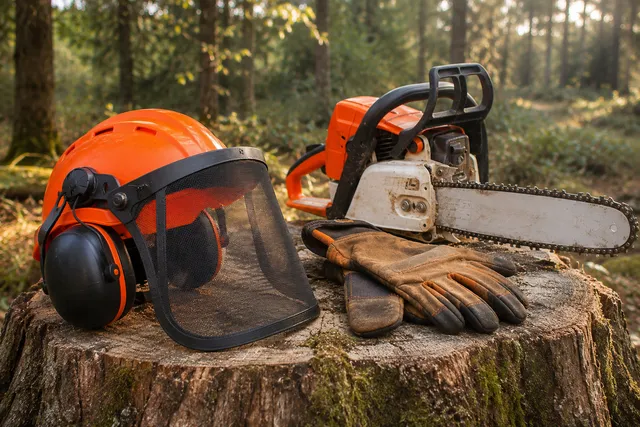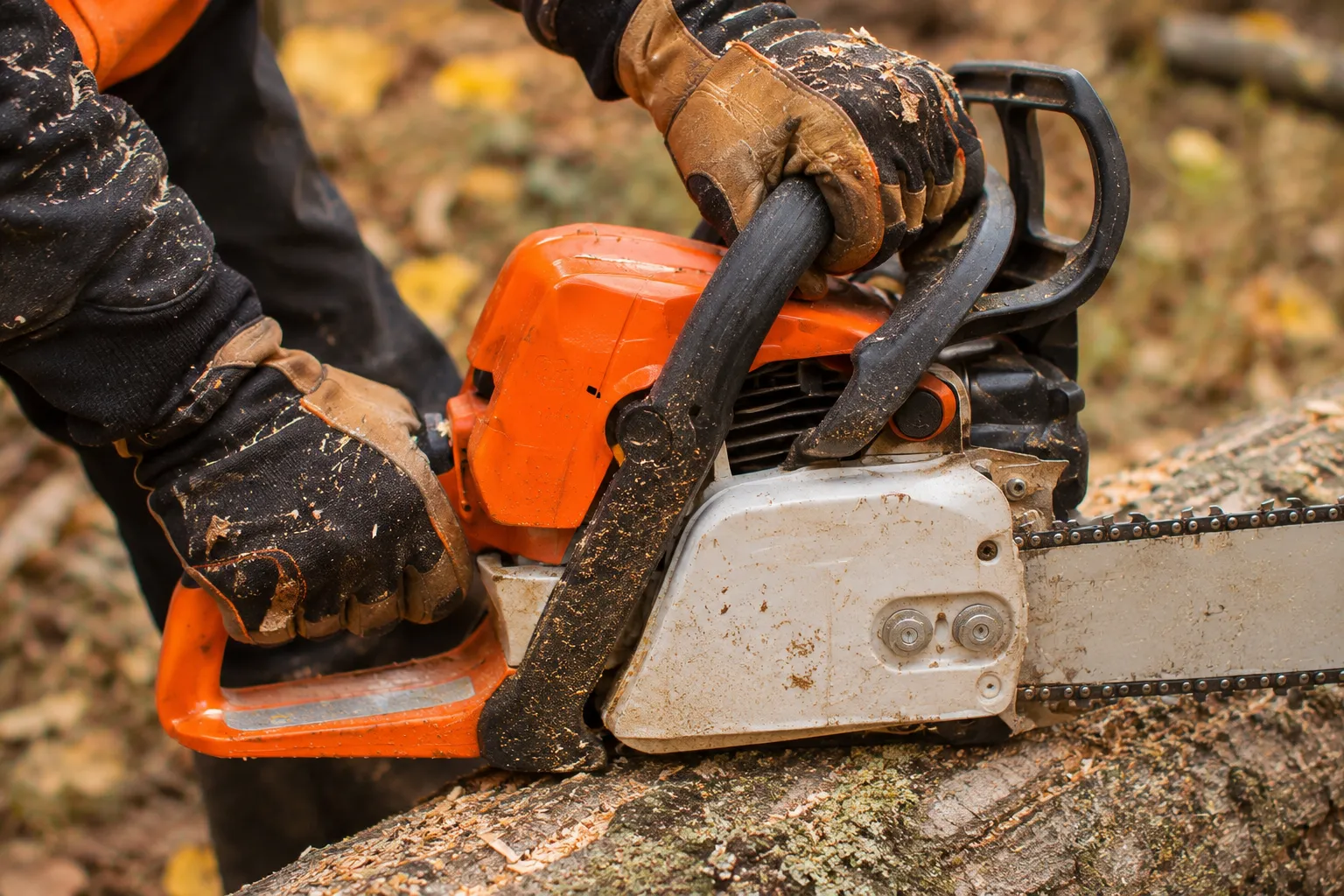
Most gloves sold as “chainsaw gloves” look a lot like ordinary leather work gloves. The difference is a patch of cut-resistant layers on the back of the left hand and, sometimes, the fingers. Without that patch, a glove gives grip and blister protection but no cut protection against a chain.
This guide compares four gloves sold in the US. It draws on manufacturer pages, retailer listings and the standards they cite, not hands-on use. Prices are approximate and were checked in November 2026. A glove does not make a saw safe. For the full kit, see what to wear when using a chainsaw.
Quick comparison
| Glove | Approx. price | Protection | Palm | Best for |
|---|---|---|---|---|
| Husqvarna Functional | $33 to $35 | Cut-resistant material, left hand | Goatskin | Good all-around value |
| Husqvarna Technical | $35 to $38 | Left hand; check class on label | Not stated | Dealer availability |
| Oregon 91305 | Price varies by dealer | EN 381-7 Class 0, left hand | Smooth leather | Fit and feel |
| Impacto Timberguard | About $30 | 20 layers, left hand, EN ISO 11393-4 Class 1 | Cowhide leather | Highest listed class |
1. Husqvarna Functional: best all-around
Husqvarna’s US page lists cut-resistant material in the left hand, a spandex back and a goatskin palm. List price is $32.99 to $34.99, depending on the seller and size. A dealer note says the right glove has no chainsaw protection. The SKU listed for size 9 is 596280509, so check the size before you order.
Good
- Spandex back for flexibility
- Goatskin palm for grip
- Low price from a well-known maker
Not so good
- US page does not list a chainsaw class
- No insulation listed
- Right glove has no protection
Buy it if you want one dependable glove for most firewood work and do not need an insulated one.
2. Husqvarna Technical: widely sold
The Technical glove puts the saw protection on the left glove. A UK retailer says the protection sits only on the back of the left glove. Husqvarna’s US listings put it at $34.99 to $37.99. Husqvarna pages for other regions cite EN ISO 11393 Class 1 at 20 meters per second, while a Canadian Tire listing states Class 0, so read the class on the pair you actually receive.
Good
- Widely stocked at dealers
- Left-hand protection
- Similar price to the Functional
Not so good
- Class differs between regional listings
- US class not confirmed on the pages reviewed
- No stated vibration rating
Buy it if a local Husqvarna dealer stocks it and you can check the label in person.
3. Oregon 91305: clearest class on the maker’s page
Oregon’s left-hand protection glove says it has extra thick material on the left hand giving chainsaw protection up to EN 381-7 standard. The page lists EN 381-7:1999 Class 0 (16 meters per second) and EN 388:2016 level 3142X for general glove performance. The glove has a smooth leather shell and reinforced palms. Oregon sells through retailers and dealers and does not list a price.
Good
- Standard and class stated on the maker’s page
- Reinforced palm
- Leather shell that conforms to the hand
Not so good
- Class 0 is the lowest chainsaw class
- No price on the maker’s page
- No insulation listed
Buy it if you want a maker-stated standard on the page before you buy.
4. Impacto Timberguard: highest listed class
The Timberguard is a cowhide leather glove with 20 layers of cut-resistant fabric in the left hand only. Tenaquip lists it as meeting EN ISO 11393-4:2019 Class 1 (20 meters per second), Type 2 Design A, left hand only. AIH lists it at $29.97, and other sellers charge more.
Good
- Class 1 listed, one step above Class 0
- Cowhide leather construction
- Low price at some US sellers
Not so good
- Price varies a lot between sellers
- Information comes from distributors, so confirm it on the packaging
- No insulation listed
Buy it if you want a higher listed class at a low price and are willing to verify the label.
How to choose chainsaw gloves
Chainsaw glove versus work glove
A general “cut resistant” glove is tested against a blade drawn across the material, which is a different problem. Chainsaw gloves are tested against a moving chain. Look for a chainsaw standard on the label, such as EN 381-7 or EN ISO 11393-4. OSHA’s logging rule lists leg, foot, head, and eye and face protection in its PPE paragraphs. It does not name chainsaw gloves, so the decision is yours.
What the protection does and does not do
The protection sits on the back of the left hand. It does not cover the palm or the right hand, and no glove replaces good technique, a working chain brake and keeping your left hand on the front handle.
Grip and fit
Gloves should fit snugly without bunching around the handle or throttle. A leather palm gives grip. Try them with the saw if you can. A glove that is too big can catch on the trigger or the handle.
Check the glove before every session
Look over the back of the left hand for cuts, frayed stitching or thin spots. If a chain has touched the glove, or the protective layers are exposed or damaged, retire it, in the same way you would retire chaps that have been cut. Follow the instructions on the label, since makers differ on care and washing.
Do not let the glove change how you work
Protective gloves can give a false sense of security. They protect against brief contact, not against holding the saw loosely or reaching past a running chain. Keep a firm wrap grip with your thumb under the handle, keep your left arm straight when you can, and read the sections on kickback and handling in your saw’s manual. See also chainsaw kickback.
Vibration
None of the listings reviewed state a vibration rating. If your hands go numb or tingle after a session, take breaks and look at the saw’s anti-vibration features rather than relying on the glove.
Cold weather
None of the US listings reviewed say they are insulated. A thin liner under the protective glove is a common fix, as is an insulated right glove, but keep the left glove close-fitting. Ordinary winter work gloves, such as those in Bob Vila’s winter tests, are not cut-rated chainsaw gloves. They are no substitute for the left-hand protection.
If money is tight: buy chaps first
Gloves are the cheapest item here, so they rarely need to wait. If you are choosing what to buy first, start with chaps: best chainsaw chaps. Then add a helmet system, then boots.
Bottom line
For most firewood cutters, the Husqvarna Functional is the simple choice, and the Oregon 91305 is the one that states its standard plainly. The Impacto Timberguard lists a higher class at a low price if you check the label. Whichever you buy, wear it on the left hand as part of a full kit and follow your saw’s manual.
Common questions
What makes a chainsaw glove different from a work glove?
A chainsaw glove has extra cut-resistant layers sewn into the back of the left hand, where the hand sits near the front handle. An ordinary leather work glove has none of that, and a glove sold as general cut resistant is rated for knives and sheet metal, not for a running chain. Look for a chainsaw standard on the label.
Why is only the left glove protected?
Most chainsaws are held with the left hand on the front handle and the right hand on the rear handle. The back of the left hand is the area closest to a chain that slips off the cut. The right glove is usually a normal work glove without cut layers.
What do EN 381-7 and EN ISO 11393-4 mean?
They are European standards for chainsaw protective gloves, with classes by chain speed. Class 0 is 16 meters per second and Class 1 is 20. No US consumer standard for chainsaw gloves was found, so these markings are what US sellers cite. Check the label for the standard and class.
Will chainsaw gloves reduce vibration?
The listings reviewed give no vibration rating. A padded palm may soften the feel, but gloves are not a substitute for a saw with good anti-vibration mounts and regular breaks. Treat anti-vibration gloves as a separate product.
Do I need a thicker glove in cold weather?
Cold hands lose feel and grip, so many people wear a thin liner under the protective glove or choose an insulated right glove. The protective left glove still needs to fit snugly, since a bulky glove can catch on the handle or trigger. Check sizing before adding liners.