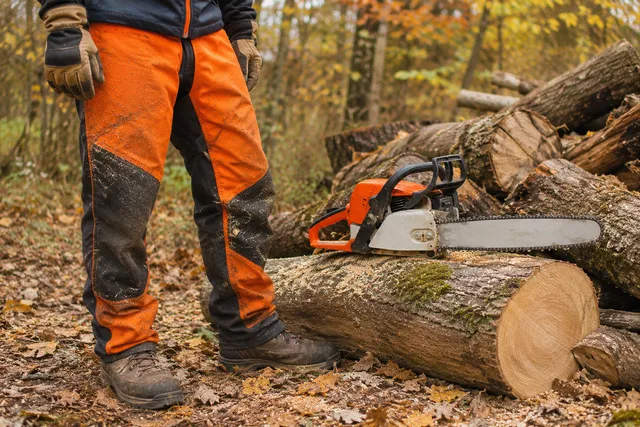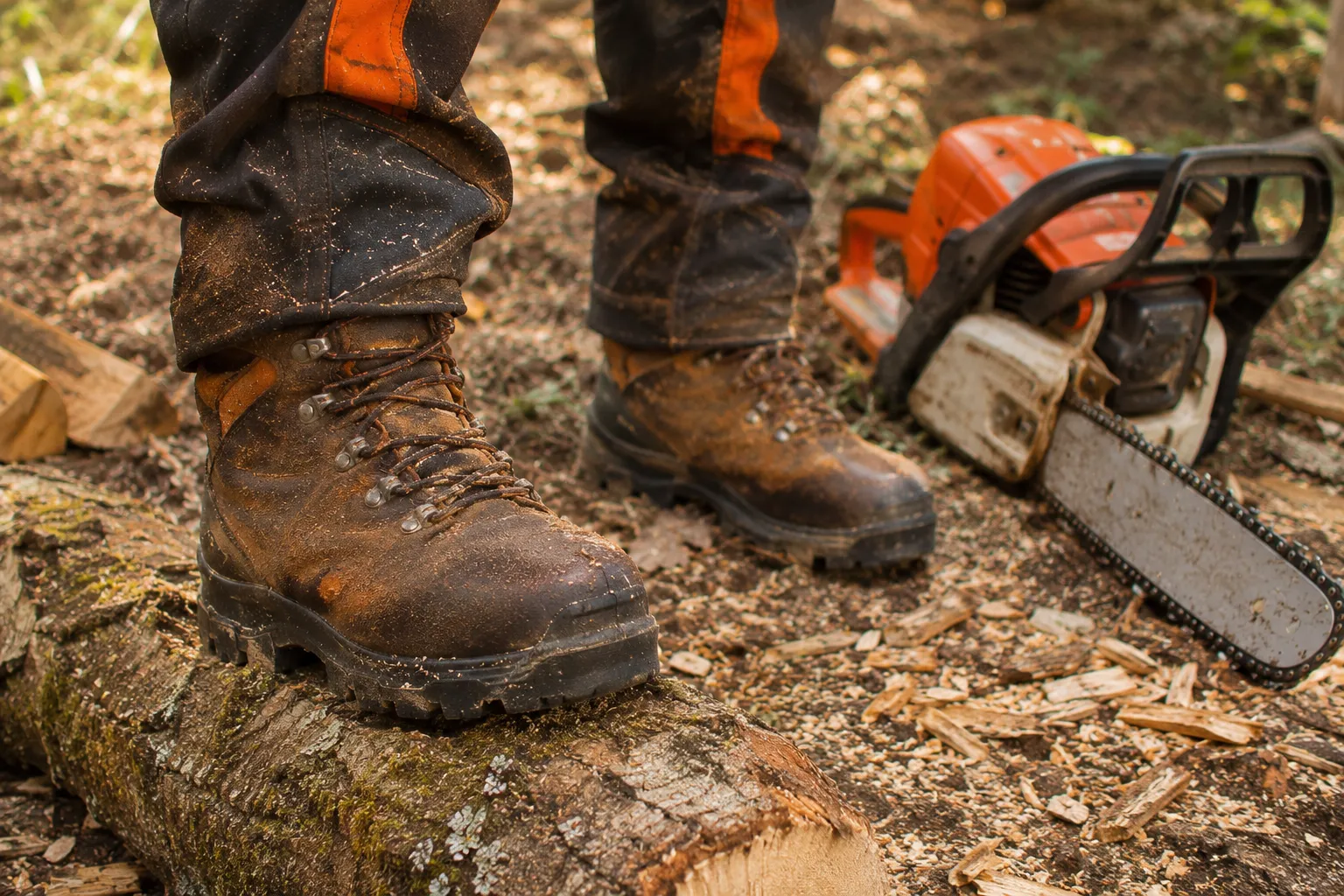
A chain that slips off a log often lands near the foot. Chainsaw boots contain layers of cut-resistant fabric in the upper, usually with a steel toe, and they are designed to resist a running chain. An ordinary logger boot has the toe cap and the ankle support, but not the cut layers.
The catch is price. Name-brand leather chainsaw boots start around $360 and can reach $500, while rubber versions can cost a fraction of that. This guide compares five boots sold in the US using manufacturer pages, retailer listings, the relevant standards and published guidance. Prices are approximate and were checked in November 2026. For the full list of gear, see what to wear when using a chainsaw.
Quick comparison
| Boot | Type | Approx. price | Cut class | Best for |
|---|---|---|---|---|
| Stihl rubber chainsaw boots | Rubber | About $106 at one retailer | Class 1 (EN ISO 17249) | Wet, muddy ground |
| Haix Protector Timber | Leather | US price not confirmed | Class 1 | Lighter leather boot |
| Stihl Advance GTX | Leather | About $460 | Class 2 | Stihl dealer buyers |
| Pfanner BOA | Leather | About $440 | Class 2 | Quick fit |
| Haix Protector Ultra | Leather | $364 to $514 | Class 2 | Premium Class 2 pick |
1. Stihl rubber chainsaw boots: best for wet work
Stihl lists its Function rubber chainsaw boots at BS EN ISO 17249 Class 1 (20 meters per second). Other retailers describe a steel toe, a self-cleaning treaded sole and a profile that suits spikes. One online retailer listed a Stihl Class 1 rubber boot at about $106 in US dollars. Stihl USA gave no price on the page reviewed, so confirm the model and price at a dealer.
Good
- Waterproof and easy to wash
- Class 1 listed by the maker
- Much cheaper than leather
Not so good
- Heavier and warmer than leather
- Less ankle support on slopes
- Price and model vary by seller
Buy it if you cut in mud or wet snow and want the lowest-cost chainsaw-rated boot.
2. Haix Protector Timber: lighter Class 1 leather
The Protector Timber is a Class 1 (20 meters per second) boot certified to EN ISO 17249:2014, with EN ISO 20345:2011 for the sole. It has a hydrophobized velour leather upper, 2.8 to 3.0 mm thick, a Gore-Tex lining, a Vibram sole and a cushioned protective toe cap. A US price was not confirmed. UK listings run £220 to £239, and some US dealers list it, so ask for a quote.
Good
- Class 1 leather boot with a Gore-Tex lining
- Vibram sole for grip
- Leather boot, so less bulky than rubber
Not so good
- US price not confirmed
- Only Class 1
- Certified to European standards, not ASTM F1818
Buy it if you want a leather boot for occasional cutting and can get a US price quote.
3. Stihl Advance GTX: best from a Stihl dealer
Stihl lists the Advance GTX at $460.99. It is a water-retardant leather boot with a Gore-Tex membrane, a padded steel toe, a rubber comfort sole and a removable orthopedic insole. Stihl says it meets EN 17249 Class 2 and EN 20345 S2 requirements and meets OSHA protective footwear requirements for chainsaw use. The page showed it out of stock online and pointed to local dealers.
Good
- Class 2 protection
- Gore-Tex membrane
- Removable orthopedic insole
Not so good
- High price
- Limited online stock
- Size chart lives on a separate Stihl page
Buy it if you already shop at a Stihl dealer and want a Class 2 leather boot.
4. Pfanner BOA: easiest to get on and off
The Pfanner BOA is a Class 2 chainsaw boot sold by Sherrill Tree at $439.99. It uses the BOA dial lacing system, which spreads lace pressure evenly. The seller says it is the lightest Class 2 boot Pfanner offers, and that tightening the dial reduces the risk of laces getting snagged. Sizes run 7 to 12 in half sizes.
Good
- Dial lacing is quick to adjust
- Class 2 protection
- Higher shaft for support
Not so good
- High price
- Dial lacing is an added mechanism to look after
- Heavy at about 7.5 pounds per the seller
Buy it if you take boots on and off often and want the lighter Class 2 option.
5. Haix Protector Ultra: premium Class 2
The Protector Ultra is a Class 2 boot with a steel toe cap, a Gore-Tex liner, a Vibram sole, built-in ankle protection and a one-year warranty against manufacturing defects. Haix USA lists the Ultra in signal red at $364 and in lime green at $399, while Sherrill Tree lists the green at $513.99, so prices vary a lot. Haix says the boots run big and recommends ordering half a size down. Its US pages list ASTM F2413 and CAN/CSA-Z195 for safety footwear and European Class 2 for cut protection.
Good
- Class 2 cut protection
- Ankle protection and Vibram sole
- Sold directly by Haix USA
Not so good
- Price swings by color and seller
- Runs big
- Pages reviewed do not mention ASTM F1818
Buy it if you cut often enough to justify a premium boot and can order the right size.
How to choose chainsaw boots
Chainsaw-rated boot or ordinary logger boot
An ordinary steel-toe logger boot is built for impact and ankle support. It has no cut-resistant layer unless the label says so. A chainsaw boot adds that layer. OSHA’s logging rule says workers who use a chain saw need boots with cut-resistant material and that boots should be waterproof, supportive and cover the ankle. OSHA’s logging eTool also lists the cut-resistant footwear paragraph, 1910.266(d)(1)(v), as a stayed provision, and does not explain the stay’s scope. Check OSHA’s current text if you need to know what applies to you.
Know the standards
ASTM F1818 is the US specification for foot protection for chainsaw users, and OSHA’s eTool says UL tests and labels it. Many European boots sold here carry EN ISO 17249 classes instead: Class 1 is 20 meters per second, Class 2 is 24 and Class 3 is 28. Look for whichever mark is on the boot, and read the manual of your saw.
Rubber or leather
Rubber is cheaper and easy to clean, which suits wet ground, but it is heavy and warm. Leather costs more and supports the ankle better on slopes and long days.
Sizing and break-in
Boot sizing varies by brand, and Haix says its boots run big. Try boots with the socks you will wear, and check the seller’s return policy before wearing them outdoors.
When a homeowner can wait
A few weekends of firewood a year can mean a rubber Class 1 boot instead of a premium leather one. If budget is tight, buy chaps first, then a helmet, then gloves, and boots last. See best chainsaw chaps, best chainsaw helmet and best chainsaw gloves.
Bottom line
For occasional cutting in wet conditions, Stihl’s Class 1 rubber boots are the budget route. For regular use, the Stihl Advance GTX, Pfanner BOA and Haix Protector Ultra are Class 2 leather options at premium prices. Whichever you choose, check the label for its cut class, match it to your saw, and pair it with chaps that reach the boot top.
Common questions
Are steel-toe boots good enough for chainsaw work?
A steel toe protects against dropped logs and crushing, which matters when you move rounds. It is not a cut-resistant boot. Unless the label lists chainsaw cut protection, assume the leather upper will not stop a chain.
What do Class 1, Class 2 and Class 3 mean on chainsaw boots?
Under EN ISO 17249, classes are based on chain speed: Class 1 is 20 meters per second, Class 2 is 24 and Class 3 is 28. Sellers disagree about which class suits which job, and chain speed varies by saw. Read your saw's manual and the boot label before choosing.
What is ASTM F1818?
ASTM F1818 is the US specification for foot protection for chainsaw users. OSHA's logging eTool points to it and says UL tests and labels foot protection. Many boots sold in the US are certified to the European EN ISO 17249 instead, so look for whichever mark the boot actually carries.
Are rubber chainsaw boots any good?
They are waterproof, easy to hose off and generally cheaper, which suits mud and wet logs. They are heavier and warmer than leather boots, and they give less ankle support on steep ground. Choose a model with a steel toe and a stated cut class.
Do I still need chaps if I wear chainsaw boots?
Yes. Boots protect the foot and lower ankle, while chaps cover the leg from the thigh down toward the boot top. OSHA's logging rule calls for leg protection running from the thigh to the top of the boot, so the two are meant to meet.