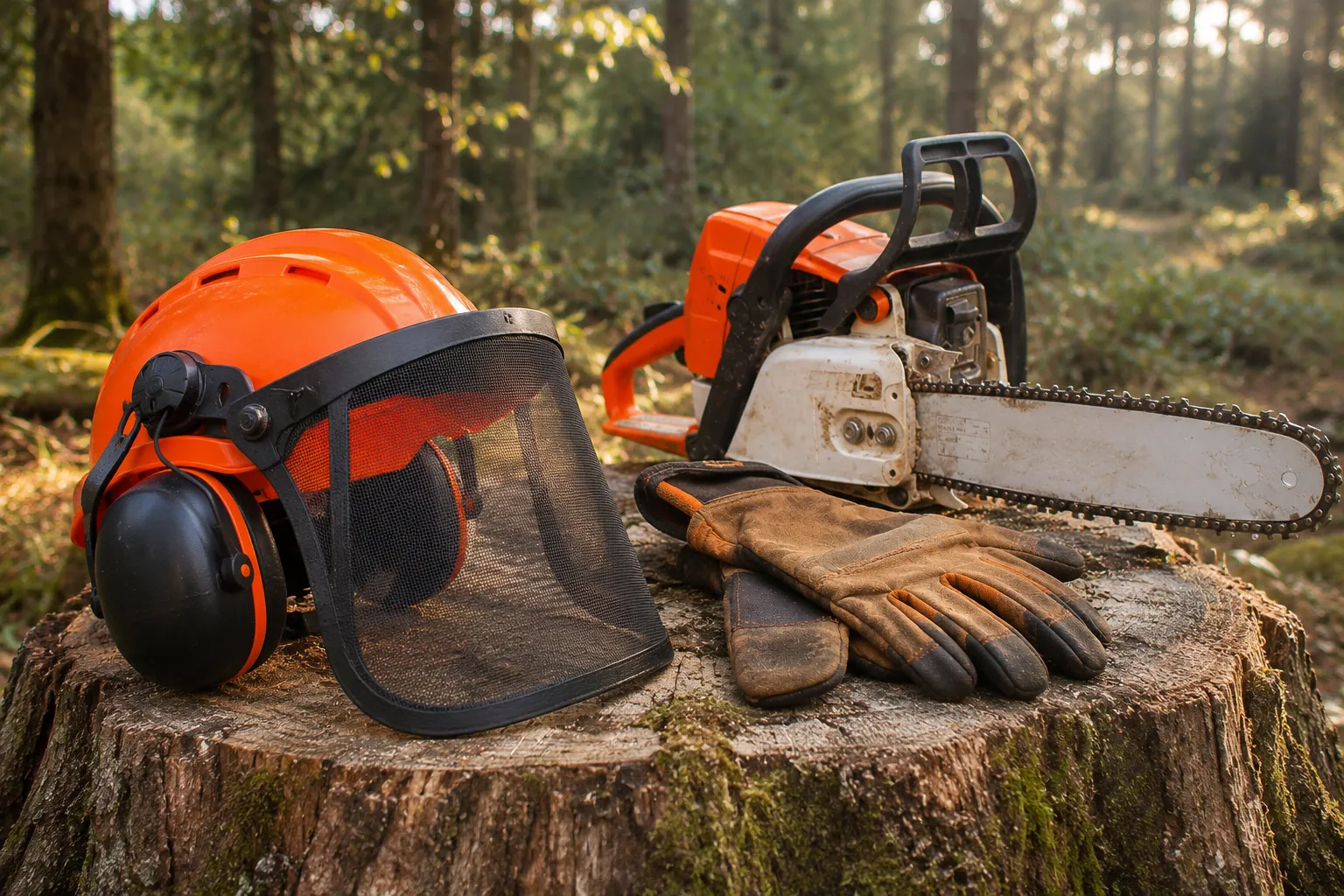
Most people picture the hard hat when they think of head protection, but a forestry helmet system does three jobs at once. The shell guards against falling limbs, the mesh visor stops flying chips, and the ear muffs cut the noise of a running saw.
That bundle is the cheapest piece of chainsaw safety gear by far. The helmets here run from about $35 to about $380, and the differences come down to standards, comfort and hearing protection. This guide is based on manufacturer specifications, retailer listings, safety standards and published guidance. Prices are approximate and were checked in November 2026. No helmet makes cutting safe. For the full list, see what to wear when using a chainsaw.
Quick comparison
| Helmet system | Approx. price | Standard listed | Hearing rating | Best for |
|---|---|---|---|---|
| Oregon 563474 combo | $35 to $50 | ANSI Z89.1-2009 Type I, Class E, G, C | Not stated | Lowest cost |
| Stihl Function Basic | About $75 | Class C certified; EN 397 manual | NRR 22 (US retailers) | Stihl dealer buyers |
| Oregon Pro 564101 | About $100 | ANSI Z89.1-2014 | NRR 24 | Better muffs on a budget |
| Husqvarna Technical | $135 to $175 | Retailer says Z89.1 Class C | SNR 26 | Comfort and UV indicator |
| Pfanner Protos Integral | $369 to $383 | Confirm marking before buying | SNR 26 (retailer) | Heavy, frequent use |
1. Oregon 563474 combo: lowest cost
This is the entry-level combination: a helmet, a stainless steel mesh visor with flip-up and flip-down action, and articulated cap-mounted ear cups, on a six-point harness. Oregon says the helmet meets ANSI Z89.1-2009 Type I, Class E, G and C requirements and has a detachable sun peak. Oregon’s page gives no hearing rating and no price. Retailers list it from about $35 to $50.
Good
- Very low price for all three components
- Z89.1 listing on the maker’s page
- Flip-up visor
Not so good
- No hearing rating published on Oregon’s page
- No guidance on replacement age on the page
- Fewer adjustments listed than pricier systems
Buy it if you cut a few times a year and want the full set cheaply.
2. Stihl Function Basic: best from a dealer
The Function Basic helmet system lists around $75 at US retailers. It has a six-point pin-lock suspension, a nylon mesh visor with elastic sealing at the brim, and weighs 1.6 pounds. US retailer listings say it is Class C certified with NRR 22 ear protection, although Stihl Canada lists NRR 24, so confirm on your unit.
The manual lists EN 397:2012 certification and sets a service life: do not use the helmet more than four years after the manufacture date printed in the shell, or more than 3,500 hours from first use. Stihl’s separate steel mesh visor page states that goggles or glasses meeting ANSI Z87.1 must be worn beneath the visor.
Good
- Clear service life stated in the manual
- Light at 1.6 pounds
- Nylon visor and ear muffs in one system
Not so good
- Hearing rating differs between sources
- Manual cites EN 397, not Z89.1
- Class C offers no electrical protection
Buy it if you want a mid-priced system with published replacement rules.
3. Oregon Pro 564101: best value hearing protection
The Oregon forestry Pro combo lists a stainless steel mesh visor with a flip function and extended face coverage. The maker states the helmet is tested to ANSI Z89.1-2014, without naming a class, and the ear muffs are rated NRR 24. Zoro lists it at about $103. Oregon sells it only through retailers and servicing dealers.
Good
- NRR 24 stated by the maker
- Z89.1-2014 testing stated
- Costs far less than the premium systems
Not so good
- Z89.1 class not named
- No replacement guidance on the page
- Sold through dealers, so stock varies
Buy it if you want a stated NRR and Z89.1 testing without paying premium prices.
4. Husqvarna Technical: best UV indicator
Husqvarna’s Technical forest helmet has a six-point suspension, a one-hand ratchet adjustment, mesh ventilation, and a free-view visor that swings fully out of the way. It also carries a UV indicator that shows the helmet’s condition and signals when to replace it. A retailer lists the muffs at SNR 26 dB(A), not NRR. Tractor Supply says the helmet is approved to ANSI Z89.1 Class C, but Husqvarna’s own listing pages did not state a class, so confirm the SKU. Prices run from about $135 to $175 without a communication system.
Good
- UV indicator takes the guesswork out of replacement
- Adjustable muffs and ratchet fit
- Sold through many US dealers and retailers
Not so good
- Hearing rating given as SNR, not NRR
- Z89.1 class varies between listings
- One reviewer on a retailer site reported the muffs detaching
Buy it if you want a more comfortable helmet with a built-in replacement signal.
5. Pfanner Protos Integral: premium
The Protos Integral is an arborist and forestry helmet that lists around $369 to $383 at US dealers. A clear visor is a separate purchase, about $93. A retailer describes the integrated hearing protection as SNR 26 dB. Pfanner is Austrian, so check for ANSI Z89.1 marking if that matters to you. A third-party seller says the shell should be replaced every five years and the support pads every two to three, but that figure is not confirmed in Pfanner’s own manual, so follow the manual that ships with the helmet.
Good
- Worn parts can be exchanged, per Pfanner’s manual
- Arborist and forestry design
- Visor is sold separately, so you can choose the type
Not so good
- Several times the cost of the others
- ANSI marking not confirmed
- Replacement intervals not verified
Buy it if you work in the woods often enough to justify a premium helmet.
How to choose a chainsaw helmet
Look for ANSI Z89.1
Z89.1 is the US standard for industrial head protection. Type I means impact to the top of the head. The class letters concern electricity: G and E give electrical protection at different voltage levels, and Class C gives none. OSHA’s logging rule, 1910.266, requires head protection that meets its general standards wherever falling or flying objects could cause injury. It binds employers, not homeowners, but it shows what professionals use.
Keep glasses on under the visor
A mesh visor stops branches and large chips, but it is not an impact lens. Stihl says Z87.1 goggles or glasses must be worn under its visor. OSHA’s logging guidance accepts logger-style mesh as eye and face protection, but the stricter manufacturer rule is the safer one to follow. Look for the Z87 mark, and Z87+ for impact.
Check the hearing rating
NRR is a laboratory rating in decibels and real-world results are usually lower. A higher number is better, but a comfortable muff you wear the whole day beats a better one you take off. Do not compare an SNR number with an NRR number.
Know when to replace the shell
Sun, heat and chemicals weaken plastic over time. Stihl’s Function Basic limit is four years from manufacture or 3,500 hours of use. Husqvarna uses a UV indicator. Replace any helmet after a hard impact, and follow the maker’s manual for the exact limit.
If money is tight: buy chaps first
Chainsaw chaps address the area directly under the saw, so they come first. See best chainsaw chaps. A helmet comes next, then gloves and boots.
Bottom line
A helmet system is the cheapest way to cover your head, face and ears. For most firewood cutters, the Oregon Pro 564101 or Stihl Function Basic offers the best mix of price, stated ratings and complete kit. The Oregon 563474 is the budget starting point, and the Husqvarna Technical adds a UV indicator. Always wear Z87.1 glasses under the visor and read your saw’s manual.
Common questions
Do I need a chainsaw helmet for cutting firewood?
A forestry helmet system bundles a hard hat, a mesh visor and ear muffs. On a firewood day it covers three separate risks: falling branches, flying chips and loud noise. OSHA requires head protection at logging operations where falling or flying objects are a hazard. Homeowners are not covered, but the same risks apply.
Is a mesh visor enough eye protection?
No. A mesh visor blocks larger debris, but it is not an impact-rated lens. Stihl's visor page says goggles or safety glasses meeting ANSI Z87.1 must be worn under it. Look for the Z87 marking, and Z87+ for impact.
What does ANSI Z89.1 mean on a helmet?
It is the US standard for industrial head protection. Type I covers impact to the top of the head. Class G, E and C relate to electrical protection, and Class C offers none. A helmet marked Class C is fine for a firewood yard but not for work near power lines.
What does NRR mean on ear muffs?
NRR is the Noise Reduction Rating, in decibels, printed on US hearing protectors. Real-world protection is usually lower than the label, so treat it as a best case. Some European makers print SNR instead, which is a different scale and should not be compared directly.
When should I replace a chainsaw helmet?
Follow the maker. Stihl's Function Basic manual says not to use the helmet more than four years after its manufacture date or 3,500 hours from first use. Husqvarna's Technical helmet has a UV indicator that signals when to replace it. Replace any helmet after a hard impact.