A gas log splitter turns a weekend of swinging a maul into an afternoon of feeding rounds onto a beam. It also costs between $1,300 and $3,000 or more, so it pays to buy the right size once.
The spec sheets look alike at first: a tonnage number, an engine size, a cycle time. The differences that matter are how much force you really need, how fast the ram cycles, and whether you want to pay extra for a Honda engine.
This guide compares five current models from 25 to 37 tons. It is based on manufacturer specifications and retailer listings, not on hands-on testing. Prices are approximate and were checked in November 2026.
Quick comparison
| Splitter | Force | Engine | Cycle time | Max log length | Approx. price |
|---|---|---|---|---|---|
| Champion 201518 | 27 tons | Champion 224 cc | 11 s | 23.8” | $1,300 to $1,750 |
| Oregon OR25TBS-1 | 25 tons | Briggs & Stratton CR950, 208 cc | 11.2 s | 25.5” | $1,600 to $1,680 |
| Brave 30-ton | 30 tons | Honda GX200, 196 cc | 14 to 15 s | Check listing | About $2,760 |
| Oregon OR35THO-1 | 35 tons | Honda GX270, 270 cc | 12.7 s | 25.5” | Varies by dealer |
| Champion 201314 | 37 tons | Champion 338 cc | 16 s | Check listing | $1,900 to $2,220 |
The Champion and Oregon models are listed as working in both horizontal and vertical positions; confirm this on the listing for the Brave. Cycle times are the makers’ or retailers’ published figures.
1. Champion 27-ton (201518): best overall
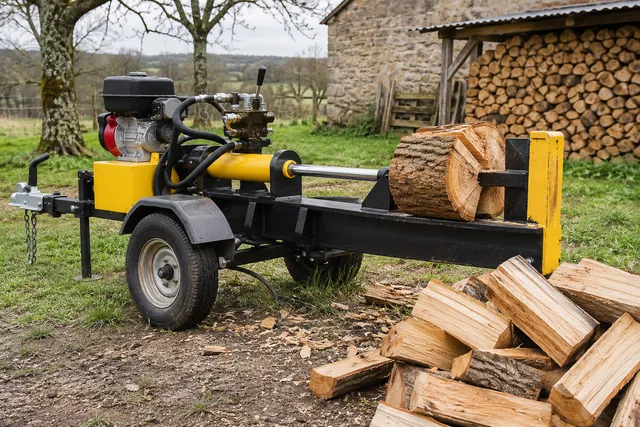
Champion’s 27-ton full-beam splitter sits in the range that suits most firewood cutters: enough force for large hardwood rounds, without the weight and price of a 35-ton machine. Champion lists a 224 cc single-cylinder OHV engine, an 11-second cycle time, a maximum log length of 23.8” and a maximum log weight of 100 pounds. The unit weighs 434 pounds and has an auto-return valve, so the ram comes back on its own while you reach for the next round.
It comes with a 2-year limited warranty. Home Depot listed this model at $1,299; other retailers that carry Champion’s 27-ton splitters listed them between about $1,440 and $1,750.
One thing to watch: Champion sells more than one 27-ton model. Retailers list the older 201312 with a 16-second cycle time, so check the model number before you order.
Good
- Fast 11-second cycle for its class
- Horizontal and vertical operation with auto return
- Widely stocked, so prices are easy to compare
- Lowest price in this guide at some retailers
Not so good
- Champion’s own engine, not a Honda or Briggs & Stratton
- 23.8” log length is the shortest here
- Similar-looking 27-ton models have slower cycle times
Buy it if you split a few cords a year and want one machine that handles nearly everything a homeowner brings home.
2. Oregon 25-ton (OR25TBS-1): best 25-ton splitter
Oregon’s 25-ton model uses a Briggs & Stratton CR950 engine of 208 cc. Oregon lists an 11.2-second cycle time, a 25.5” log capacity, a 4.5-gallon hydraulic system and a 2-year warranty. Shipping weight is 459 pounds, which makes it the easiest machine here to move around a yard by hand.
Oregon sells it only through retailers and servicing dealers. Several US retailers listed it at about $1,600 to $1,680.
Good
- Name-brand Briggs & Stratton engine
- 25.5” log capacity, longer than the Champion 27-ton
- Sold through servicing dealers
Not so good
- Costs more than some 27-ton machines
- Least force in this guide
- Sold only through retailers and dealers, with no published list price
Buy it if your wood is mostly straight-grained and under 20” across, and you would rather buy from a local dealer.
3. Brave 30-ton: best mid-size splitter with a Honda engine
If you are searching for a log splitter with a Honda engine but do not need 35 tons, Brave’s 30-ton model pairs that force with a Honda GX200. Tractor Supply’s listing gives a 196 cc engine rated at 6.5 hp and a cycle time of about 15 seconds; Ace Hardware lists the same machine at 14 seconds. Both listed it at about $2,760.
That is roughly $1,000 more than a 27-ton splitter with a house-brand engine. You are paying for the engine and the build, not for speed.
Good
- Honda GX200 commercial-grade engine
- 30 tons covers most difficult rounds
- Sold by national farm and hardware chains
Not so good
- Slower cycle time than the 25 and 27-ton picks
- Much higher price per ton
- Retailer listings disagree slightly on cycle time
Buy it if you want a Honda engine above all and plan to keep the splitter for a long time.
4. Oregon 35-ton (OR35THO-1): best large splitter with a Honda engine
Oregon’s 35-ton splitter is the strongest spec sheet in this guide. It uses a Honda GX270 of 270 cc and a 2-stage, 17 GPM pump, which gives a 12.7-second cycle time, faster than most machines of this size. Log capacity is 25.5” and the hydraulic system holds 6.6 gallons; Oregon notes that fluids are not included. It has a 2” ball coupler, and Oregon lists a maximum towing speed of 45 mph.
Oregon covers workmanship and hydraulics for 2 years, and the engine carries Honda’s own warranty. The shipping weight is 700 pounds, so plan on moving it with a vehicle or a tractor.
Oregon does not publish a price, and we could not confirm a current one for the Honda version. For reference, one dealer listed the otherwise similar Briggs & Stratton version (OR35TBS-1) at about $2,300. Expect the Honda model to cost more, and ask a dealer for a quote.
If you prefer to buy from a farm store, Champion’s 201628 also uses a Honda GX270. Champion and Tractor Supply list it with a 14 GPM pump and a 17-second cycle time.
Good
- Honda GX270 engine
- 12.7-second cycle is quick for a 35-ton machine
- 17 GPM pump and 25.5” log capacity
Not so good
- No published price; dealer quotes vary
- 700 pounds with packaging
- More machine than most homeowners need
Buy it if you heat mainly with wood, split big hardwood every year, and want a Honda engine.
5. Champion 37-ton (201314): most force for the money
Champion’s 37-ton splitter uses the company’s 338 cc engine. Farm and Fleet lists a 16-second cycle time. Prices ranged from about $1,900 at Farm and Fleet to about $2,220 at Tractor Supply and Big R, which is less than several 30-ton machines with name-brand engines.
The trade-off is speed. A 16-second cycle is five seconds slower than Champion’s own 27-ton model, and on ordinary rounds the extra force goes unused.
Good
- Highest force rating in this guide
- Low price per ton
- Horizontal and vertical operation with auto return
Not so good
- Slowest cycle time here
- Champion engine, not a Honda
- More force than ordinary firewood rounds need
Buy it if you often deal with oversized, knotty rounds and care more about force than speed.
How to choose a gas log splitter
Pick the tonnage for your worst logs
- 20 to 27 tons: typical firewood rounds, including most hardwood.
- 28 to 30 tons: large rounds, crotches and stringy species such as elm.
- 35 tons and up: very large or knotty rounds, or heavy yearly use.
There is no shared industry test for tonnage, so two machines with the same rating can behave differently. Use the rating to pick a class, then compare pump size and cycle time.
Read cycle time with care
A faster cycle means more splits per hour, but only if you can keep up with the machine. The gap between 11 and 16 seconds adds up over a full day. For an hour here and there, it matters less than the price.
Decide whether the engine brand matters to you
Search results for the best rated gas log splitter often lead to Honda-powered models. The Honda GX series has a strong reputation and a large service network, and that is a fair reason to pay more. It does not make the splitter push harder: force comes from the pump and the cylinder. Briggs & Stratton and house-brand engines cost less and are common on machines under $2,000.
Check what is in the crate
Most splitters ship partly assembled. Some include hydraulic fluid and engine oil; some do not. Hydraulic systems on these machines hold between 4.5 and 6.6 gallons, so the fluid is a real cost if it is not included.
Think about storage and moving it
The machines with a published weight run from roughly 430 to 700 pounds. They are built to be towed, and pushing one across a soft lawn by hand is hard work.
A note on safety
Wear eye protection and gloves, and keep one person at the controls: the operator should be the only one near the wedge when the ram moves. Hold logs by their sides, never by the ends, and stop the engine before clearing a jam.
If you cut your own rounds, a sharp chain makes that part of the job faster and safer. Our guide to the best chainsaw sharpener covers the options.
Bottom line
For most homeowners, the Champion 27-ton (201518) is the best gas log splitter: it is fast, it has enough force for nearly any firewood round, and it is the least expensive machine here at some retailers. Choose the Oregon OR25TBS-1 if you want a Briggs & Stratton engine and dealer support. If a Honda engine is the priority, look at the Brave 30-ton for mid-size work or the Oregon OR35THO-1 for big wood.
Common questions
How many tons do I need in a gas log splitter?
For typical firewood rounds, most homeowners are well served by a 25 to 27 ton machine. Step up to 30 tons or more if you regularly split large, knotty or stringy hardwood rounds. Tonnage ratings are set by each manufacturer, so treat them as a guide and not an exact measurement.
Is a log splitter with a Honda engine worth the extra money?
Honda GX engines are commercial-grade and are serviced by a wide dealer network, which is why splitters that use them cost more. The engine does not change the splitting force. If you split a few cords a year, a splitter with the maker's own engine or a Briggs and Stratton does the same job for less.
What does cycle time mean?
Cycle time is how long the ram takes to extend fully and return. Manufacturers measure it with no load, and real times depend on the wood and the temperature. Shorter is faster, but you rarely use the full stroke on every log.
Do I need a splitter that works vertically?
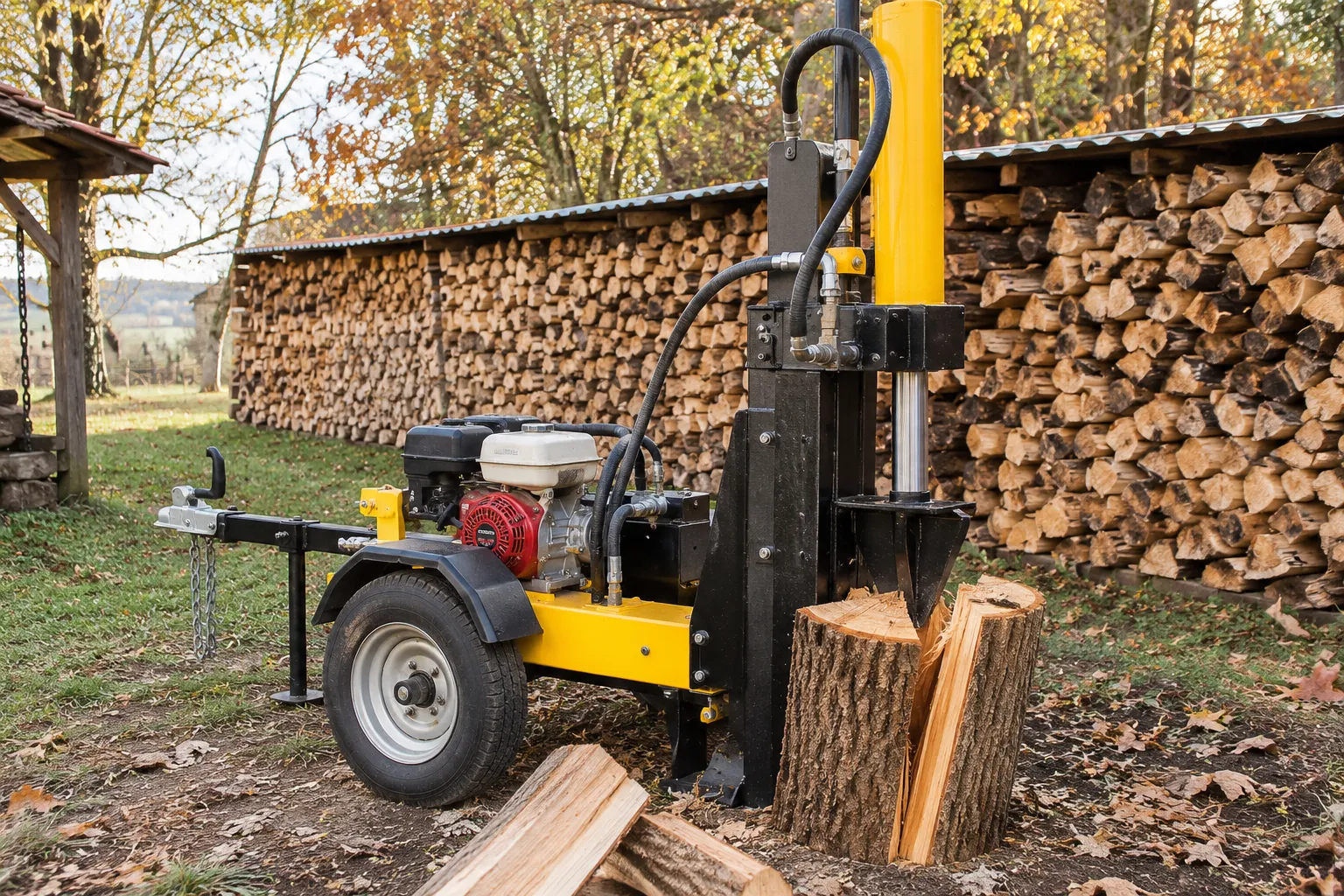
Vertical mode lets you roll a heavy round onto the foot plate instead of lifting it to beam height. The Champion and Oregon splitters in this guide are listed as working both horizontally and vertically. If your rounds are small enough to lift comfortably, you will mostly use horizontal mode.
Can I tow a gas log splitter on the road?
Most tow-behind splitters have a 2" ball coupler and are rated for low road speeds. Oregon, for example, lists a 45 mph maximum. They usually have no suspension or lights, so check your state's rules and the manual before towing on public roads.